Imagine a bustling city, teeming with millions of unique individuals, each with their own stories, histories, and instructions for life. In metagenomics, our “city” is an environmental sample—be it soil, water, or even the human gut—and the “individuals” are the countless microorganisms within it. To understand this complex community, we need to access the fundamental information molecule that defines them all: DNA.
DNA is the ultimate evidence we collect, prepare, and read in this course. It’s the molecular blueprint that tells us who’s there, what they’re doing, and how they interact. This lesson will prepare you to understand the foundational concepts of DNA structure, base-pairing, and the genome, setting the stage for how we extract and analyze this invaluable information.
The Twisted Ladder: DNA Structure
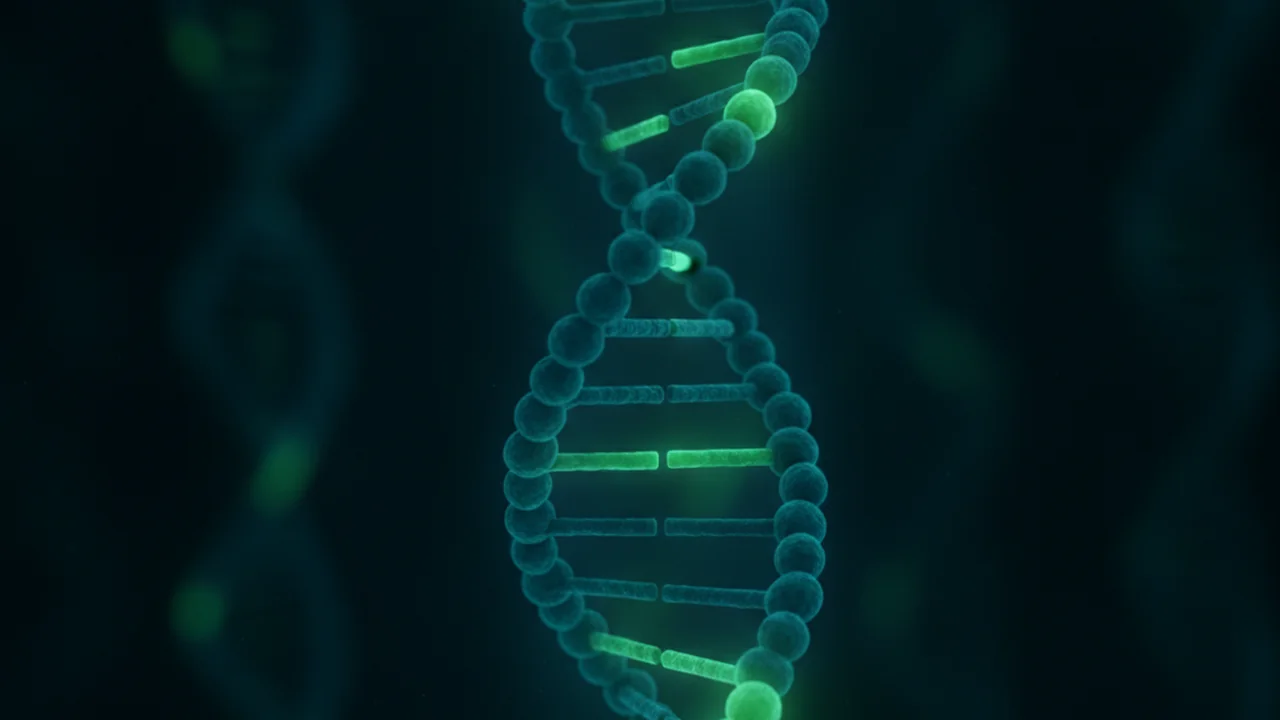
At its core, DNA—or deoxyribonucleic acid—is a marvel of biological engineering. It’s composed of two linked strands that elegantly twist around each other, forming a structure famously known as a double helix. You can visualize this as a twisted ladder, where the sides are formed by robust sugar-phosphate backbones, and the rungs are made of specific chemical pairings.
In the upcoming video, you’ll see an animated double helix rotating slowly, making it easy to appreciate how the sturdy sugar-phosphate backbones glow on the outside, providing structural integrity, while the delicate base pairs connect like the rungs of a ladder on the inside, holding the two strands together.
A molecule composed of two polynucleotide chains that coil around each other to form a double helix, carrying genetic instructions for the development, functioning, growth, and reproduction of all known organisms and many viruses.
Consider the double helix. Why do you think a twisted ladder structure would be advantageous for storing genetic information?
The Universal Code: Base Pairing
The “rungs” of the DNA ladder are incredibly specific, formed from four fundamental chemical units called bases. These are adenine (A), thymine (T), cytosine (C), and guanine (G). The magic of DNA’s information storage lies in how these bases pair up: Adenine (A) always pairs with Thymine (T), and Cytosine (C) always pairs with Guanine (G).
This strict pairing rule (A-T, C-G) is crucial for DNA’s function, ensuring that when DNA replicates, the information is copied accurately. The video will visually demonstrate this, showing A, T, C, and G as colored molecular shapes that appear and pair only in their correct combinations, with minimal and elegant labels to highlight their identities.
The discovery of the double helix structure by Watson and Crick in 1953, building on Rosalind Franklin’s X-ray diffraction images, was a monumental turning point in biology, revealing how genetic information could be stored and copied.
- DNA is a double helix with sugar-phosphate backbones and base pair rungs.
- The four bases (A, T, C, G) pair specifically: A with T, and C with G.
Information Unlocked: The Sequence of Life
It’s the specific order, or sequence, of these base pairs along the DNA strand that stores biological information. Think of it like a biological instruction manual. Just as the order of letters forms words and sentences, the order of A’s, T’s, C’s, and G’s forms genetic codes.
This genetic information is incredibly versatile. It can help build proteins (the workhorses of the cell), regulate cellular processes, and, critically for metagenomics, reveal which organisms may be present in a sample. The video will illustrate this by tracking along a DNA strand, showing the base sequence transforming into a stream of biological instructions that lead to a protein-like folded structure.
The “Central Dogma” describes the flow of genetic information within a biological system. It states that DNA makes RNA, and RNA makes protein. This fundamental principle explains how the sequence of bases in DNA is first transcribed into messenger RNA (mRNA), and then translated into the amino acid sequence that forms a protein. This complex, yet elegant, pathway is how the instructions stored in DNA are ultimately expressed to carry out life’s functions.
DNA is just a static blueprint for an organism.
DNA is a dynamic molecule, constantly being read, replicated, and repaired, actively influencing cellular function and adaptation throughout an organism’s life.
Beyond the Individual: The Genome Concept
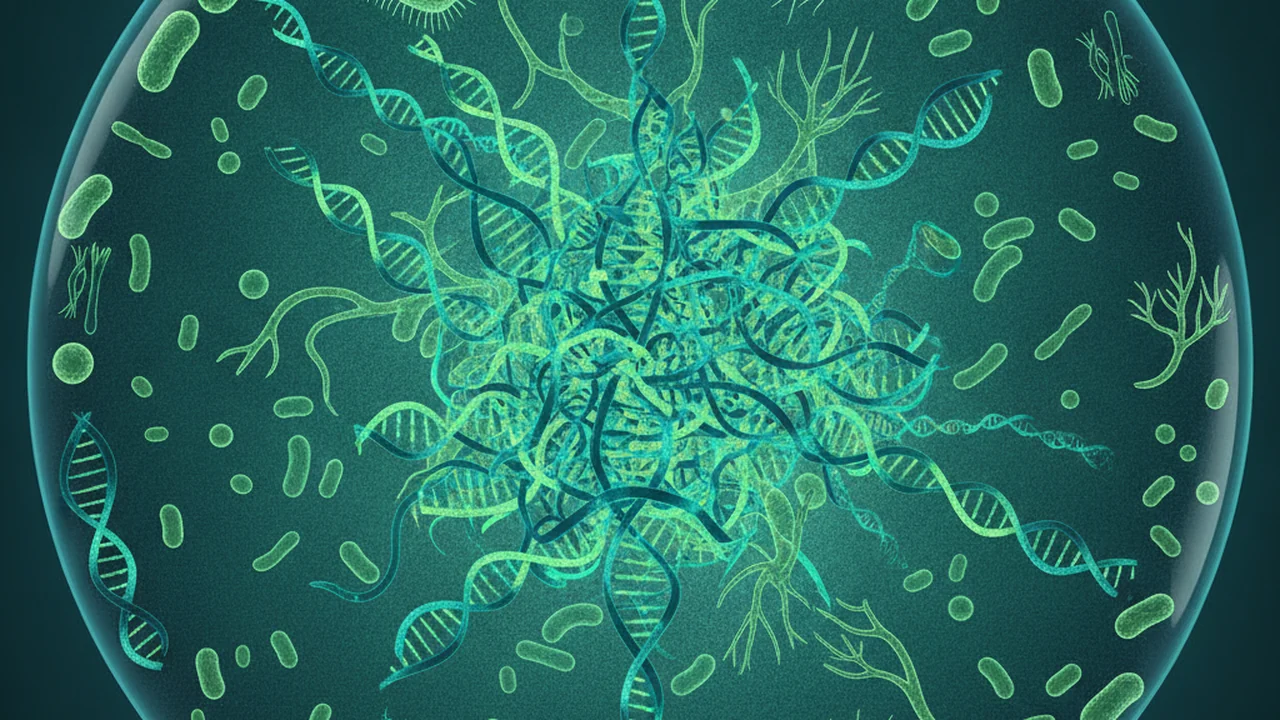
When we talk about an organism’s complete set of DNA instructions, we refer to its genome. Every cell in a single organism typically contains a full copy of its genome, acting as its unique instruction manual.
However, in metagenomics, our perspective shifts dramatically. We are not examining a single organism in isolation. Instead, our environmental sample contains DNA from potentially hundreds or thousands of different organisms. This means we are not reading one genome; we are exploring a complex biological community, each member contributing its own distinct genome to the collective genetic information of the sample.
To visualize this, the video will first show a complete organism silhouette made from many DNA threads, representing a single genome. Then, it will expand to show multiple organisms within one environmental sample, each with its own unique genome, illustrating the rich diversity we aim to uncover.
The complete set of genetic material (DNA or RNA) present in a cell or organism, including all of its genes and non-coding sequences.
eDNA in Conservation: Environmental DNA (eDNA) analysis, a form of metagenomics, is revolutionizing conservation. Scientists can collect a water sample from a lake, extract the DNA, and identify dozens of species—from fish to amphibians to invasive plants—without ever needing to see or capture the actual organisms. This non-invasive method provides rapid and comprehensive biodiversity assessments.
How does the concept of studying “a community of genomes” rather than “a single genome” change the complexity and potential insights of your research?
Reinforce your understanding of DNA’s fundamental structure.
- On a piece of paper, sketch a segment of a DNA double helix.
- Label the sugar-phosphate backbones and indicate where the base pairs form the “rungs.”
- Draw at least two complete base pairs, ensuring you correctly show Adenine pairing with Thymine, and Cytosine pairing with Guanine. Use simple letters (A, T, C, G) for the bases.
- Consider adding a small arrow to show the “twist” of the helix.
Which of the following correctly describes the base pairing rules in DNA?
Reflect on the power of DNA as an “information molecule.” How does understanding its structure and function, especially in the context of metagenomics, change your perspective on life and environmental studies?
DNA, a double helix with specific base pairing (A-T, C-G), acts as the fundamental information storage molecule; in metagenomics, we analyze the collective genomes of diverse organisms within a sample to understand an entire community.
A genome is the entire set of DNA instructions found in a cell. In metagenomics, a sample may contain DNA from many organisms, so we are not reading one genome. We are exploring a community.
Bridging to the Bench: Getting the DNA Out
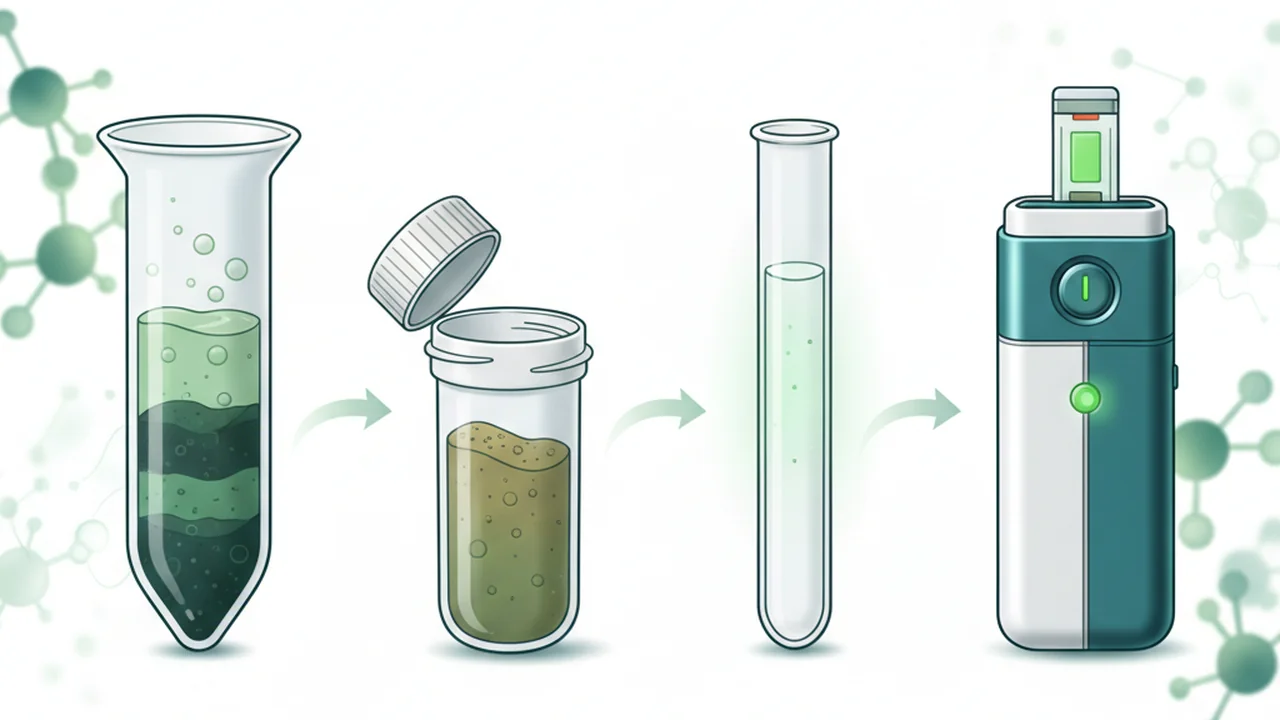
Understanding DNA’s structure and the concept of a genome in a community context is the first crucial step. The next challenge is practical: how do we actually get this precious DNA out of the environmental material? This process, from sample collection to sequencing, involves several critical stages.
The video concludes by visually illustrating this workflow, showing DNA strands flowing into a labeled-free sequence of steps: extraction, quantitation, PCR, sequencing, and analysis. Each of these stages is vital for isolating the DNA, ensuring its quality, amplifying specific regions, reading its sequence, and finally, making sense of the vast biological information it contains.
As you move forward, remember that the cleanliness and integrity of the extracted DNA are paramount for successful molecular biology. The journey from a raw environmental sample to meaningful biological insights begins with carefully liberating the code behind the sample.