How does a scientific question translate into a meticulously planned field-sampling strategy that yields a representative, uncontaminated soil sample ready for the lab?
In scientific research, the journey from an initial question to actionable data begins long before the lab — out in the field, with careful site selection and precise sampling. This hands-on walkthrough follows that journey step by step: choosing a meaningful, safe site, reasoning about what shapes its microbial community, documenting everything thoroughly, and collecting a clean, representative soil sample ready for DNA extraction.
Field sampling is the first hands-on step of a metagenomics study, and getting it right protects every analysis that follows. The walkthrough below moves through the full sequence — from arriving at your site to sealing a representative soil sample for transport to the lab.
The Field Scientist’s Mindset
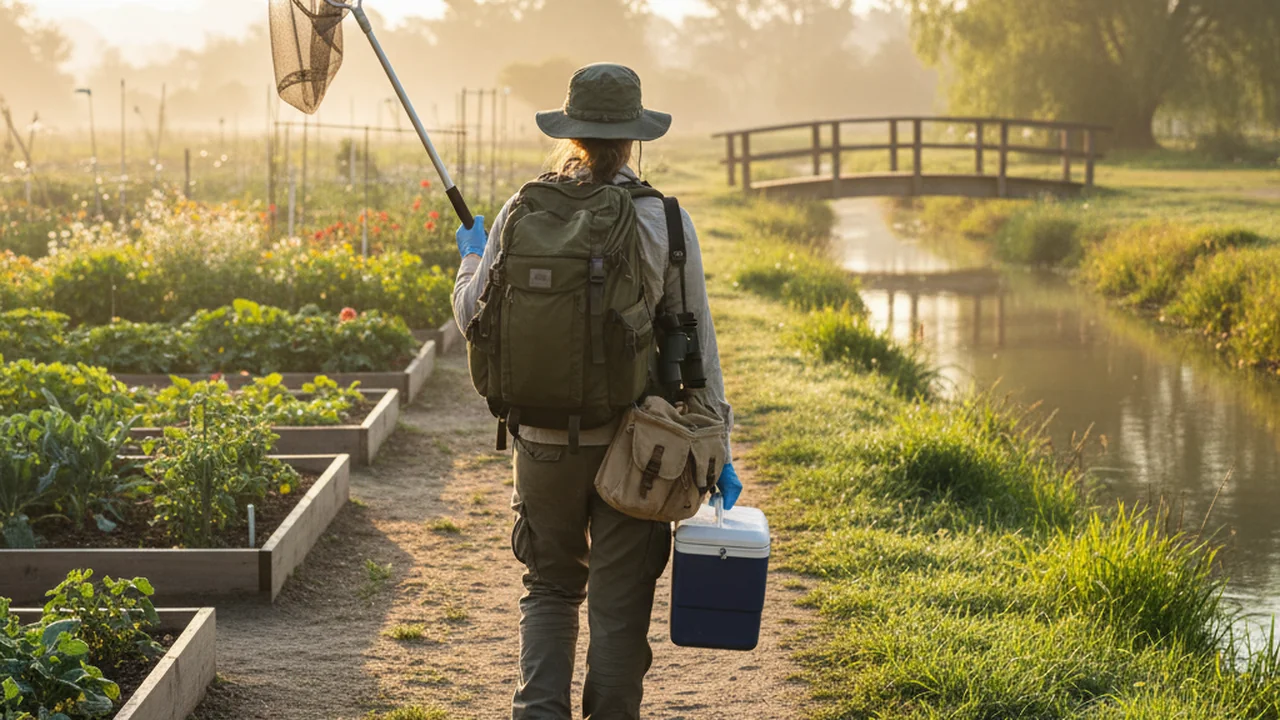
A good metagenomics project begins before the lab. It begins with a place, a question, and a reason for collecting a sample there. Picture yourself at the edge of a park, equipped with gloves, a field notebook, a phone for GPS, a sample bag, and a soil corer. Everything that follows in the lab depends on the choices you make here.
Choosing Your Site
Your site should be publicly accessible, safe to sample while standing on your feet, and close enough to your community that you can explain why it matters. Steer clear of anything that compromises safety or access — private property without permission, steep or fast-moving water edges, and traffic hazards.
Which of the following is NOT a primary criterion for selecting a metagenomics sampling site, according to this lesson?
Scientific Reasoning
Before you sample, ask what might shape the microbial community here. Is there runoff? Vegetation? Animals? Human activity? Seasonal change? Conditions upstream can affect what you find downstream, so think about the site as part of a larger, connected environment.
Any soil sample from a public place is equally valuable for metagenomics research.
Effective metagenomics requires careful consideration of environmental factors and potential influences to ensure the sample is scientifically meaningful and representative of a specific ecological context.
- A metagenomics project starts with a place, a question, and a reason.
- Sampling sites must be safe, accessible, and community-relevant.
- Environmental factors like runoff and human activity significantly shape microbial communities.
Documenting the Site

Before collecting any material, record the GPS location and photograph the site and its surrounding area. Sketch notes in your field notebook and assign a sample ID. These details give your sample its context — the environmental, geographical, and temporal information that future scientists need to interpret your results or replicate the study.
Why is meticulous documentation, including GPS and photographs, so crucial for the reproducibility and interpretability of scientific findings?
Refers to all the environmental, geographical, and temporal data associated with a biological sample. Thorough sample context is essential for interpreting metagenomics results and for future replication or comparative studies.
Collecting the Sample
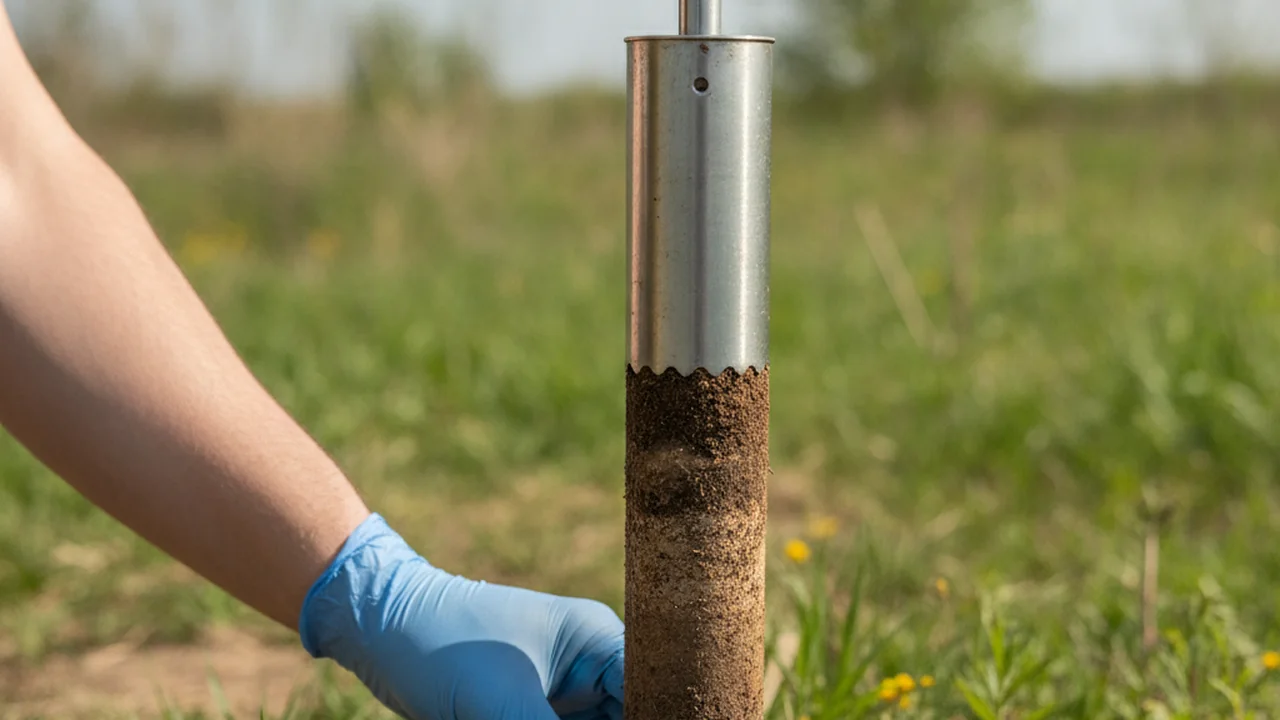
Put on gloves and keep the sample bag open. Avoid touching the lower end of the soil corer so you don’t contaminate it. Insert the corer about one inch into the soil, then use the plunger to push the soil into the bag. Careful handling here keeps your sample a faithful record of the environment rather than of your hands.
Imagine you need to collect soil samples for a metagenomics study in your local community. Outline a brief plan considering the following:
- Identify a potential sampling site that meets the criteria above.
- List at least three environmental factors you would consider for scientific reasoning.
- Describe how you would document the site before collecting samples.
What are the potential risks of inadequate personal protection (like not wearing gloves) or improper handling of equipment (like touching the corer tip) during sample collection?
Building a Composite Sample
Collect three samples from the same site, ideally three to five feet apart, and combine them in the same bag. Together they give a more representative picture of that location, averaging out small-scale variation. Seal the bag and place it in a transport container for the trip to the lab.
A sample created by combining multiple individual samples taken from different points within a defined area. This method helps to average out local variations and provides a more representative analysis of the overall site.
What is the primary reason for collecting a composite sample, as described in this lesson?
Metagenomics studies in agriculture often use composite sampling to assess soil microbiome health across large fields, helping farmers understand nutrient cycling, disease resistance, and overall crop productivity.
Bridging to the Lab
Once the sample reaches the lab, the goal changes: release the DNA from the material and separate it from everything that could interfere with sequencing. The care you took in the field now pays off as that representative sample heads into DNA extraction.
Once the sample reaches the lab, the goal changes: release the DNA from the material and separate it from everything that could interfere with sequencing.
Design a sampling plan for a site in your own community. Which site would you choose, and why does it matter? What upstream or environmental influences might shape its microbial community, and how would you document the site so another scientist could reproduce your work?
A successful metagenomics project relies on meticulous planning and execution — from selecting a scientifically sound, safe, community-relevant site, to documenting it thoroughly, to collecting a representative composite sample that faithfully reflects the environment.