How do meticulous planning and precise field techniques lay the foundation for a successful metagenomics project?
Before any lab work begins, a successful metagenomics project starts in the field. It’s about more than just collecting a sample; it’s about connecting a place, a scientific question, and a clear reason for your collection strategy.
What makes a specific location an ideal choice for studying microbial communities, and what considerations might influence your decision?
The Field Scientist’s Mindset: From Question to Site
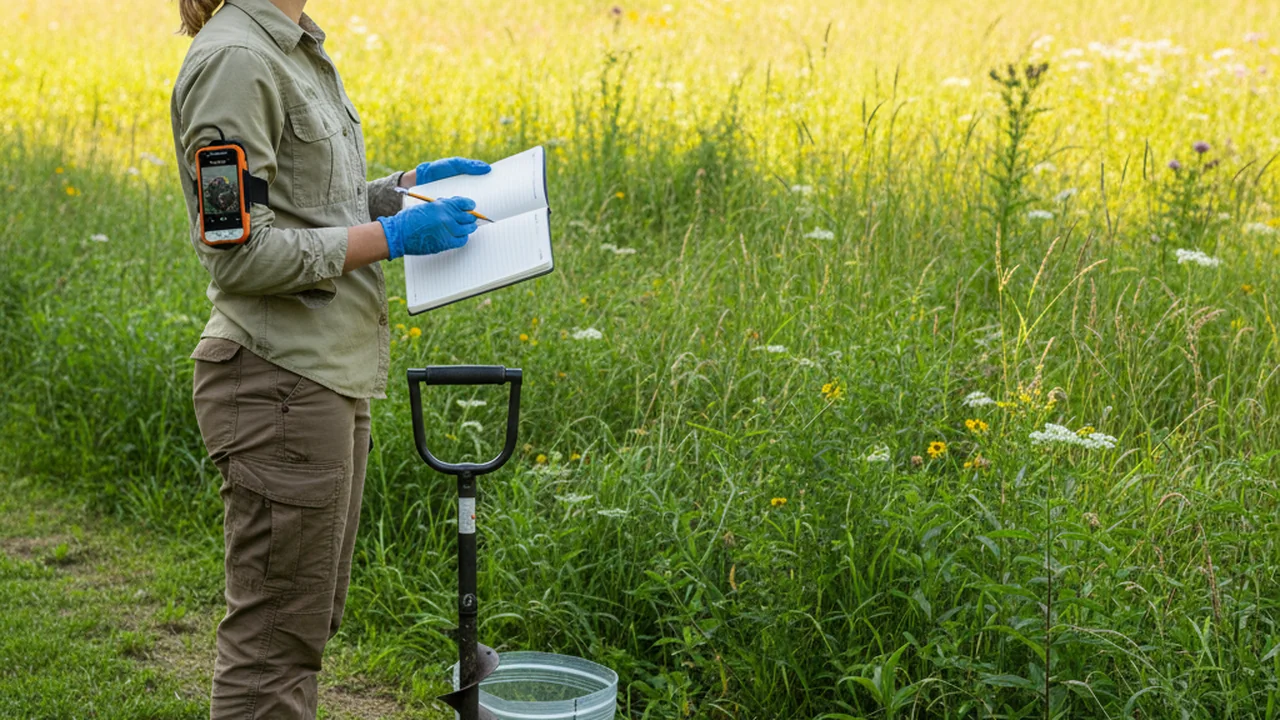
Imagine yourself as a student scientist, standing at the edge of a park with your gloves, notebook, phone GPS, sample bag, and soil corer. This isn’t just a walk in the park; it’s the critical first step in uncovering the hidden microbial worlds around us.
A good metagenomics project begins before the lab. It begins with a place, a question, and a reason for collecting a sample there.
Choosing Your Site: Criteria for Success
The location you choose for sampling is paramount. Not just any spot will do. Your site selection must be deliberate, considering both practical and ethical factors.
Your site should be publicly accessible, safe to sample while standing on your feet, and close enough to your community that you can explain why it matters. This ensures not only your safety but also the relevance and reproducibility of your research.
Any available outdoor location is suitable for collecting a metagenomics sample, as long as it contains soil.
Effective metagenomics sampling requires sites that are publicly accessible, safe for the researcher, and geographically relevant to the research question to ensure ethical practice and meaningful data.
Scientific Reasoning: Unpacking the Environment
Once you have a potential site, it’s time to think like a detective. What environmental factors might be shaping the microbial communities present?
Ask what might shape the microbial community. Is there runoff? Vegetation? Animals? Human activity? Seasonal change? Conditions upstream can affect what you find downstream.
Microbial communities are incredibly sensitive to their environment. Even subtle changes in water flow, foot traffic, or nearby vegetation can drastically alter the types and abundance of microorganisms found in a soil sample.
A collection of different microbial species (bacteria, archaea, fungi, viruses, etc.) inhabiting a specific environment and interacting with each other and their surroundings.
- A successful metagenomics project starts with thoughtful site selection.
- Sites must be accessible, safe, and relevant to your research question.
- Environmental factors like runoff, vegetation, and human activity significantly influence microbial communities.
Documentation: Your Scientific Fingerprint
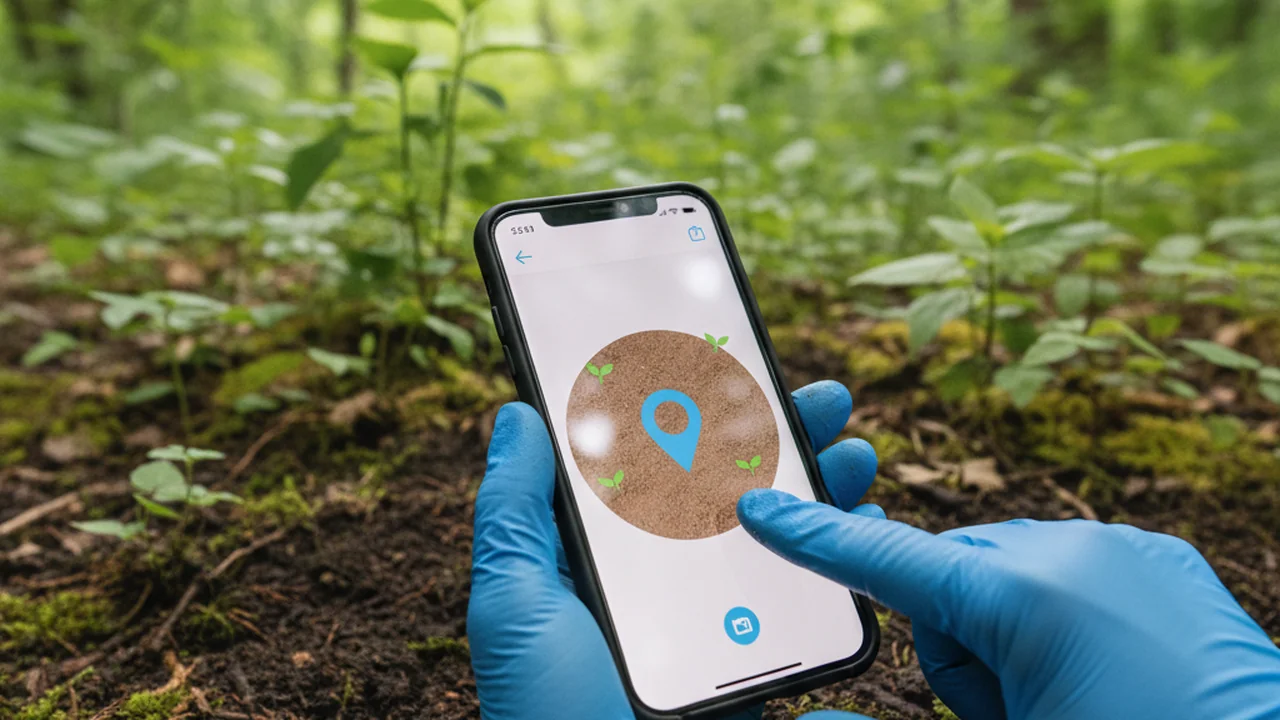
Before you even touch the soil, thorough documentation is non-negotiable. This isn’t just good practice; it’s essential for the integrity and reproducibility of your scientific work.
Before collecting material, record the GPS location and photograph the site and surrounding area. These details help future scientists understand the sample context.
In large-scale environmental studies, precise GPS coordinates and detailed site photographs are crucial for tracking changes over time and allowing other researchers to revisit and re-sample the exact same locations for comparative analysis.
Collection Protocol: The Nitty-Gritty
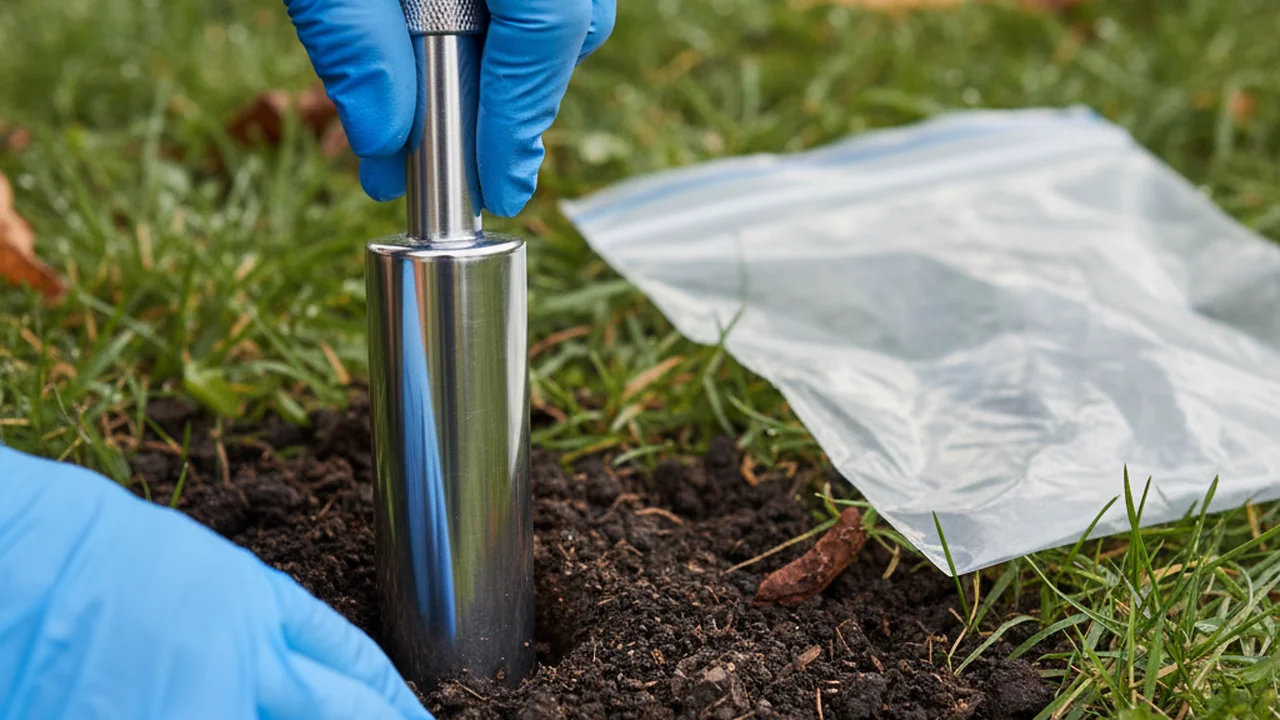
With your site chosen and documented, it’s time for the physical act of collection. Precision and adherence to protocol are key to avoiding contamination and ensuring your sample accurately reflects the environment.
Here’s a breakdown of the collection steps:
- Put on gloves and keep the sample bag open.
- Avoid touching the lower end of the soil corer to prevent contamination.
- Insert the corer about one inch deep into the soil.
- Push soil into the plastic bag using the plunger.
- Repeat for 3 samples, approximately 3–5 feet apart within the same site.
- Seal the bag and prepare it for transport back to the lab.
This process of collecting multiple sub-samples from the same area leads to a more robust and representative “composite sample.”
Imagine you need to collect a soil sample to investigate the impact of urban runoff on microbial diversity near a local park. Outline your detailed field sampling plan.
- Identify three specific criteria you would use to select your exact sampling spots within the park.
- Describe what documentation you would collect at each spot.
- Explain how you would ensure your composite sample is representative of the chosen area.
Why is it critical to collect multiple small samples (a composite sample) from a single site rather than just one large sample?
Composite Samples: A Holistic View
The practice of collecting multiple sub-samples from a single site is fundamental in environmental metagenomics. It minimizes the impact of micro-variations within the environment and provides a more accurate representation.
Collect three samples from the same site, ideally three to five feet apart. Together, they give a more representative picture of that location.
A sample created by combining several individual sub-samples collected from different points within a defined area. This approach helps to average out spatial variability and provides a more representative analysis of the overall site.
Together, they give a more representative picture of that location.
Want to go deeper? The science behind micro-variability
Even within a few feet, soil composition, moisture levels, nutrient availability, and microclimates can vary significantly, leading to different microbial populations. A single sample might capture an anomaly, whereas a composite sample averages these small-scale variations, providing a more robust and reliable representation of the broader site’s microbial community. This is particularly important for ecological studies where generalizations about an ecosystem are desired.
Which of the following is NOT a primary criterion for selecting a metagenomics sampling site?
Reflect on the entire field sampling process, from site selection to sample collection. What are two potential sources of error or contamination you would be most vigilant about, and how would you mitigate them?
What is the primary purpose of collecting a composite sample by taking three sub-samples from the same site?
The success of any metagenomics project hinges on meticulous planning and execution of field sampling, ensuring sites are appropriately selected, documented, and sampled to truly represent the microbial communities under study.
Careful documentation of GPS coordinates, photographs, and environmental observations is as crucial as the physical sample collection, providing essential context for interpreting results and ensuring reproducibility.