How do we ensure the DNA we’ve painstakingly extracted is actually ready for complex molecular reactions like sequencing?
Before diving into the intricate world of metagenomic sequencing, a crucial checkpoint awaits: verifying the quality and compatibility of our extracted DNA. Imagine preparing for a grand culinary experiment; you wouldn’t start without first checking the freshness of your ingredients. In molecular biology, Polymerase Chain Reaction (PCR) serves as our essential quality control step, ensuring our DNA “ingredients” are pristine and ready to react.
Crafting the PCR Master Mix
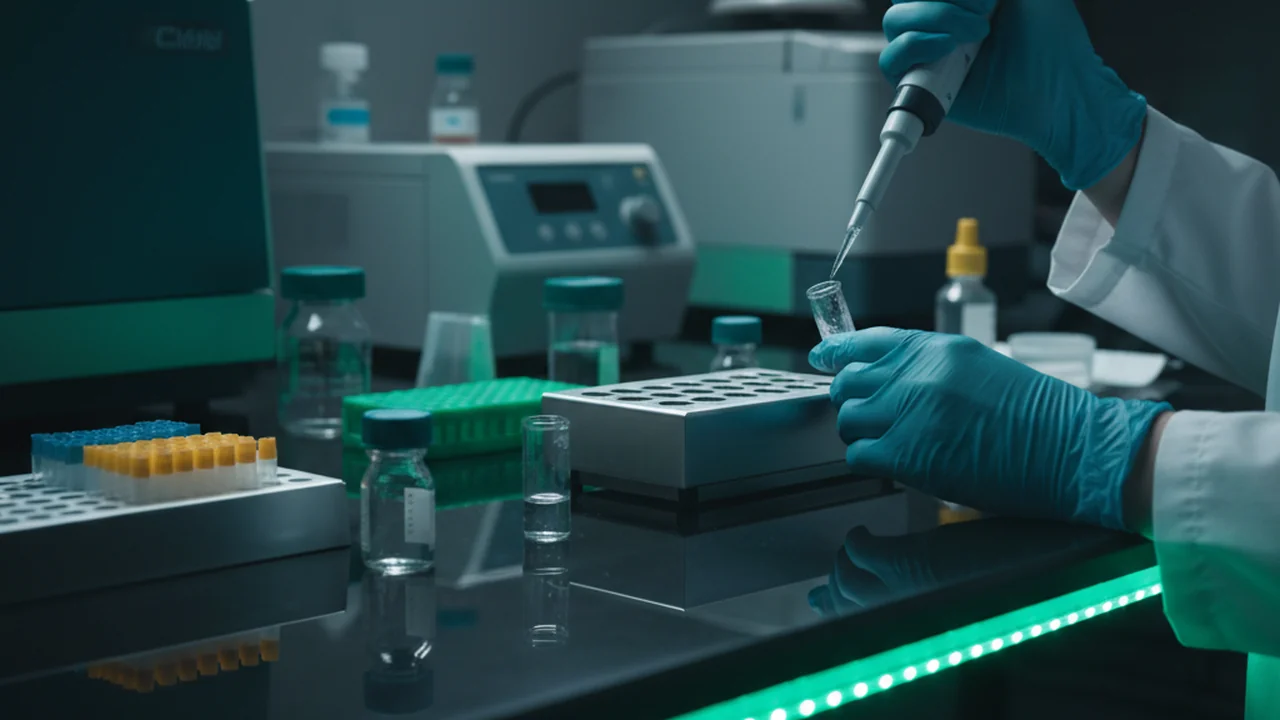
Every successful PCR amplification begins with a precisely formulated master mix. This concoction contains all the necessary reagents for the reaction to proceed efficiently. Here’s a breakdown of the components you’ll typically find in a single reaction:
- 5 µl 2× GoTaq Master Mix: This pre-mixed solution is a powerhouse, containing the buffer (to maintain optimal pH), dNTPs (the building blocks for new DNA strands), and the DNA polymerase (the enzyme that synthesizes new DNA).
- 0.1 µl Forward primer (100 µM): A short, synthetic DNA strand designed to bind to the beginning of our target region.
- 0.1 µl Reverse primer (100 µM): Another short DNA strand, this one designed to bind to the end of our target region on the complementary strand.
- 3.8 µl Sterile water: Used to bring the reaction to the correct final volume and concentration.
- Total: 9 µl (+ 1 µl DNA = 10 µl): Once 1 µl of your extracted DNA is added, the total reaction volume will be 10 µl.
Consider each component of the PCR master mix. What specific role does each play in ensuring the successful amplification of DNA?
PCR is a molecular biology technique used to make many copies of a specific DNA segment. It involves a series of temperature cycles that denature DNA, anneal primers, and extend new DNA strands, resulting in exponential amplification.
The Significance of the 16S rRNA Gene
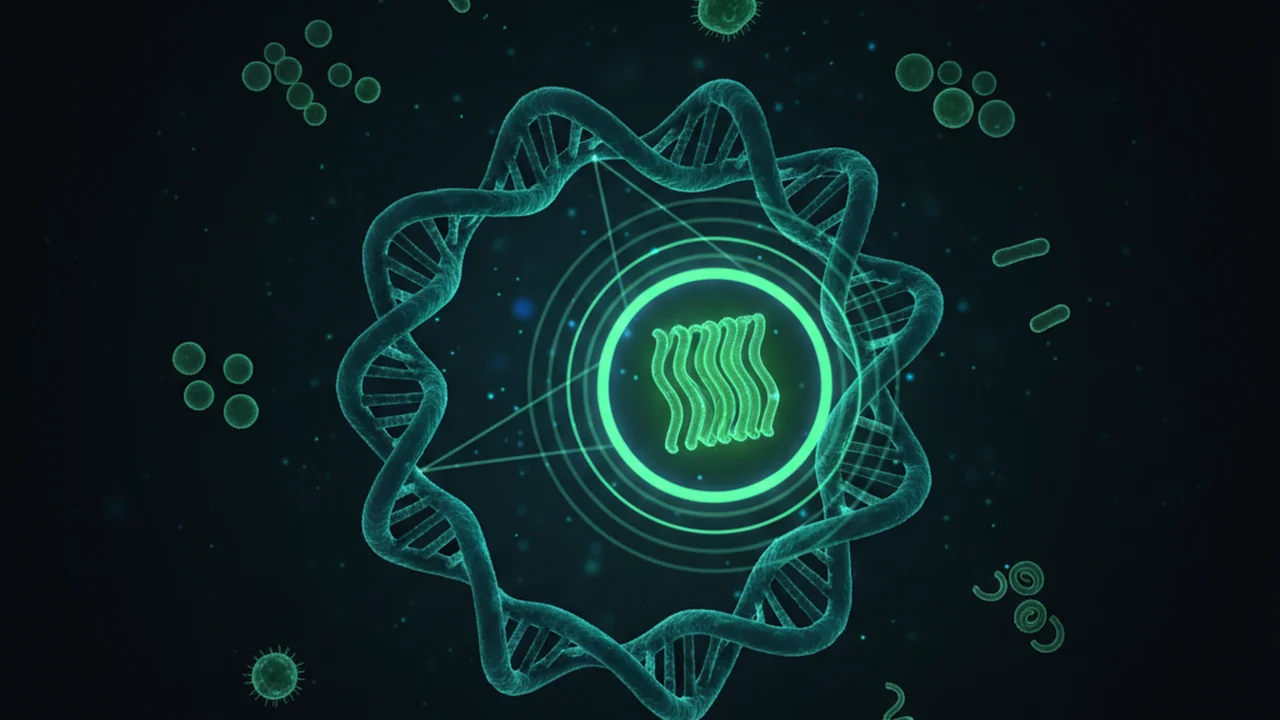
The 16S rRNA gene is a fundamental marker in microbial ecology, universally present in bacteria and archaea. It’s a mosaic of conserved and variable regions, making it incredibly useful for both identifying organisms and, in our case, assessing DNA purity.
The 16S gene has 9 variable regions (V1–V9). Conserved regions flank variable regions used for species identification. For this protocol, we amplify V4 only for inhibitor testing, not species identification — that comes in Library Prep.
Amplifying the 16S V4 region immediately provides a full inventory of all bacterial species present in our sample.
In this specific protocol, amplifying the 16S V4 region serves as a crucial quality control step to test for the presence of PCR inhibitors, ensuring the DNA is pure enough for subsequent molecular reactions. Species identification happens later.
Environmental samples (like soil, gut contents, or water) often contain substances such as humic acids, heavy metals, or polysaccharides that can interfere with DNA polymerase activity. These “inhibitors” can lead to failed or inefficient PCR, making early detection vital for metagenomic projects.
The goal is to test whether inhibitors were removed well enough for amplification to occur.
The 16S rRNA gene is highly conserved across vast evolutionary distances, meaning it’s present in almost all bacteria and archaea. This makes it an ideal target for universal primers that can bind to conserved regions flanking the variable regions. The variable regions themselves, like V4, accumulate mutations at a rate that allows for differentiation between species. By targeting a specific variable region like V4, we can gain enough information to assess overall microbial community structure, or in this case, simply confirm the presence of amplifiable bacterial DNA, indicating successful inhibitor removal.
- The PCR master mix contains essential components like polymerase, dNTPs, and primers for DNA amplification.
- The 16S rRNA gene, with its conserved and variable regions, is a key target in metagenomics.
- For this protocol, amplification of the 16S V4 region specifically tests for the presence of PCR inhibitors, not for species identification.
Imagine you have a single target DNA segment. Mentally or by sketching:
- Draw or describe how many copies of the target DNA would exist after one complete PCR cycle.
- Now, extend your visualization to show how many copies would be present after three complete cycles.
- Reflect on why this exponential amplification is so powerful for detecting even tiny amounts of DNA.
In a real lab, the “gentle tap” and “quick spin” are crucial. They ensure all reagents are properly mixed and collected at the bottom of the tube, preventing evaporation and ensuring the entire reaction volume is available for amplification. Skipping these seemingly minor steps can lead to inconsistent or failed results.
Considering the entire process, from master mix preparation to placing the tube in the thermal cycler, why is each step, no matter how small, critical for the success of the PCR reaction?
What is the primary purpose of amplifying the 16S V4 region in this specific PCR protocol?
Which component of the PCR master mix is directly responsible for synthesizing new DNA strands?
Reflect on how meticulous quality control steps, like the PCR test for DNA purity, contribute to the reliability and accuracy of larger scientific studies, especially in fields like metagenomics where samples can be highly complex. How might a single overlooked inhibitor affect an entire research project?
Successful metagenomic sequencing hinges on early quality control, with PCR of the 16S V4 region serving as a critical test for DNA purity and compatibility with molecular reactions, rather than immediate species identification.