How do we transform raw biological signals into meaningful, interpretable insights?
Raw data from sequencing experiments is just the beginning. The real power lies in converting these complex signals into clear, actionable biological evidence. This process, known as bioinformatics, is the bridge between the wet lab and biological understanding.
It’s a multi-step journey, each stage refining the data, removing noise, and extracting vital information. Understanding these steps is crucial for anyone working with genomic data.
Mykrobe — Species identification and resistance prediction
TB Profiler — Tuberculosis-specific analysis
These specialized bioinformatics tools demonstrate how raw sequencing data can be quickly processed to yield critical diagnostic and epidemiological insights, guiding treatment decisions and public health responses.
The entire process of transforming raw sequencing signals into biological insights follows a specific sequence:
Raw signal → Basecalling → FASTQ reads → Quality Control → Alignment or Assembly → Annotation → Biological interpretation
The Bioinformatics Pipeline
Let’s walk through the key stages of a bioinformatics pipeline, visualizing how raw data evolves into interpretable results, much like scenes unfolding in a video.
Step 1: Data Begins
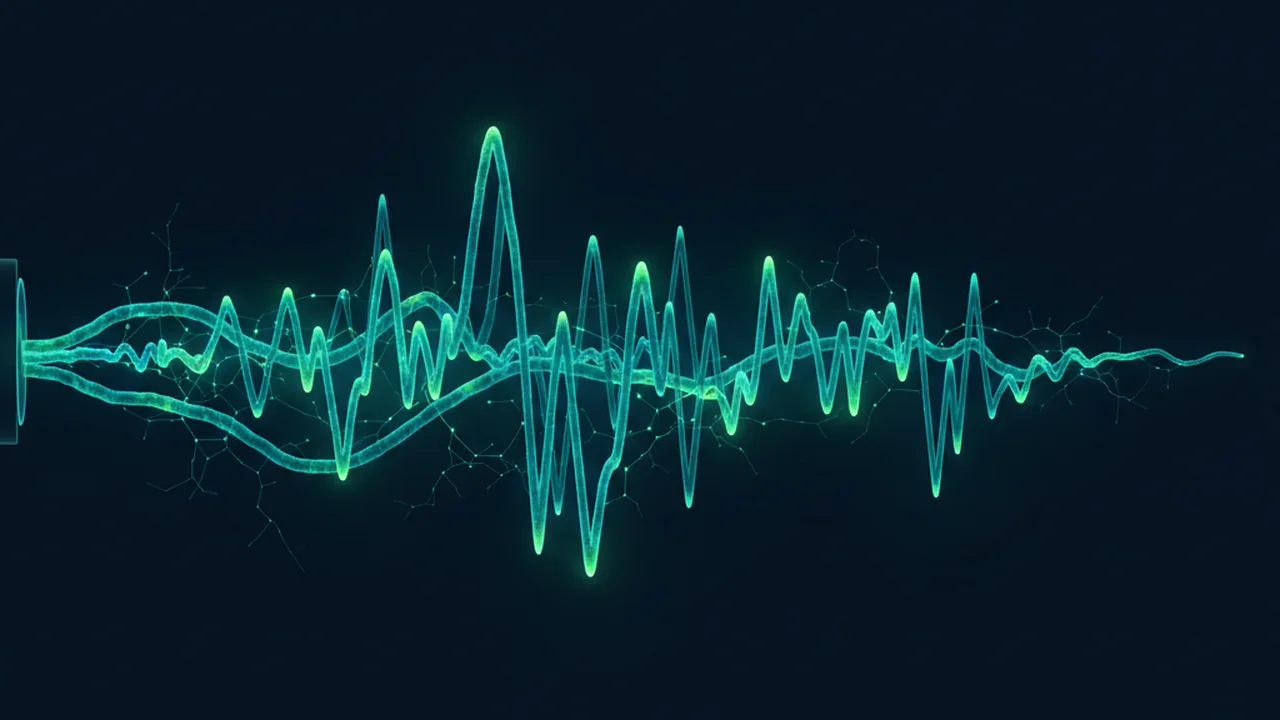
Imagine Nanopore electrical signal traces streaming from the sequencer into a computer screen. This is where it all starts. As the narration explains:
“Sequencing produces data, but not instant answers. Bioinformatics is the process of converting raw signal into interpretable biological evidence.”
This initial burst of electrical signals is rich with information, but it’s not yet in a form we can directly understand or analyze biologically. It’s the rawest form of data, requiring specialized processing to unlock its secrets.
Consider the difference between collecting raw data and having a scientific answer. What makes bioinformatics essential in bridging this gap?
Step 2: Basecalling
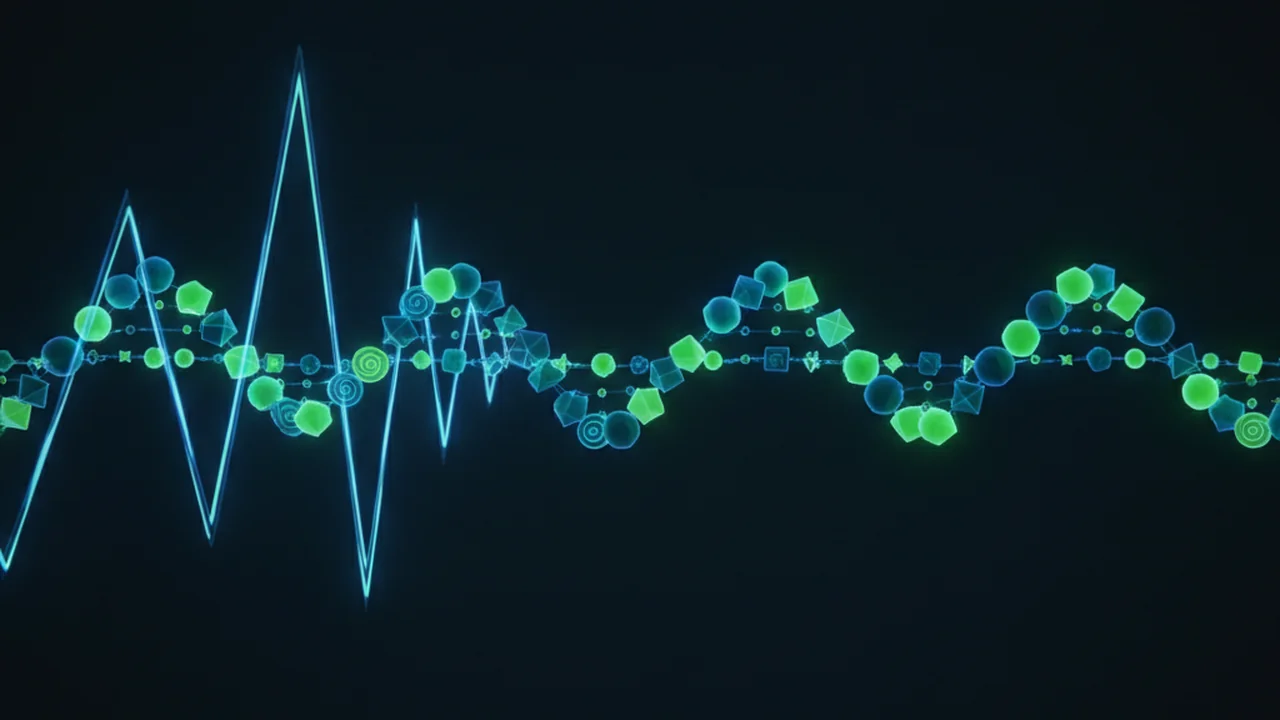
Next, watch as an electrical squiggle waveform transforms into recognizable DNA bases (A, T, C, G). This is the critical step of basecalling.
“The first major step is basecalling. Software interprets changes in electrical signal and converts them into DNA sequence reads.”
Basecalling algorithms are complex, translating the subtle fluctuations in electrical current, caused by individual DNA bases passing through a nanopore, into the actual genetic code. Without this, the raw signal remains just that – a signal.
Modern basecalling algorithms often employ deep learning neural networks, making them highly accurate and capable of adapting to new sequencing chemistries and pore types.
Step 3: Demultiplexing
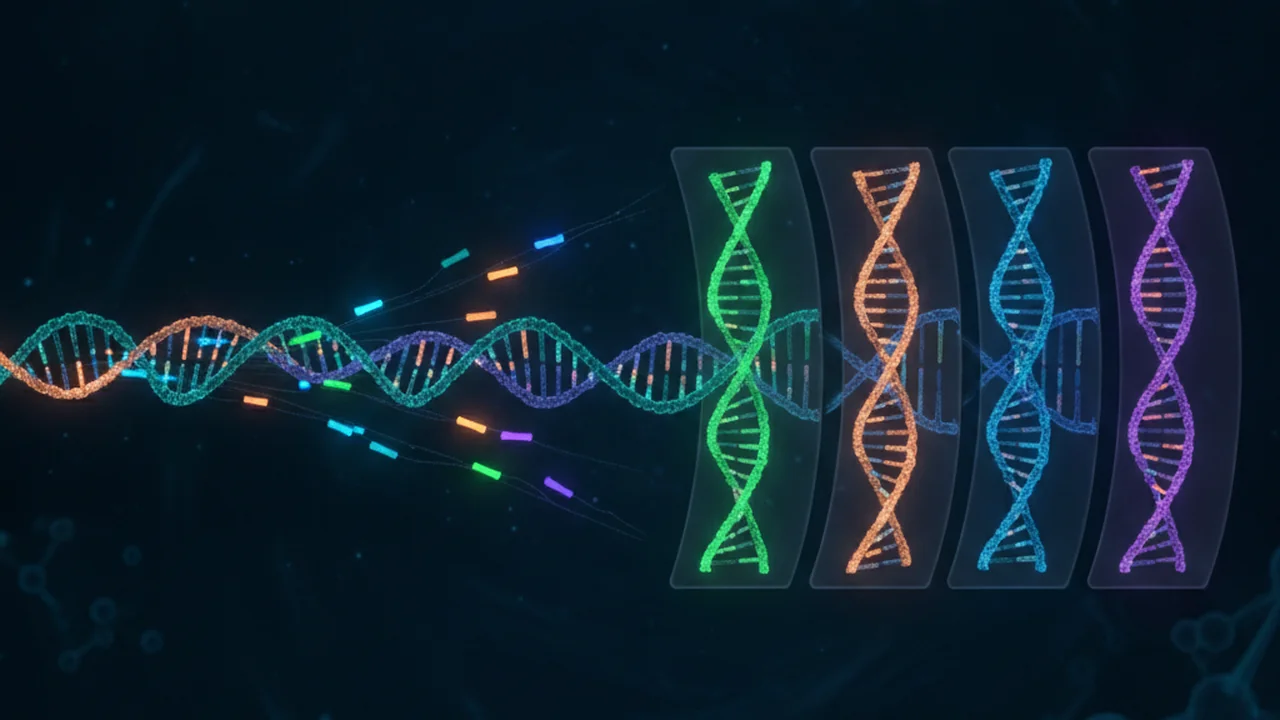
Picture reads, visually distinguished by different barcode colors, separating and streaming into distinct, sample-specific folders. This sorting process is demultiplexing.
“Because the samples were barcoded and pooled, the software must sort reads back to their original samples. This is demultiplexing.”
Barcoding allows multiple samples to be sequenced simultaneously on a single flow cell, increasing efficiency and reducing costs. Demultiplexing is the essential step to ensure that each read is correctly assigned back to its original biological sample.
Want to go deeper? The science behind barcoding…
Barcoding involves ligating short, unique DNA sequences (barcodes) to the ends of DNA fragments from each sample BEFORE pooling them for sequencing. During demultiplexing, the software identifies these barcodes and uses them as ‘address labels’ to separate reads into individual sample files. This dramatically increases throughput and reduces per-sample cost.
Step 4: FASTQ Processing and Quality Control

Visualize FASTQ file icons moving through quality control filters. Low-quality reads visibly fade away, while high-quality reads continue on. This highlights the importance of quality control.
“Sequence reads are commonly stored as FASTQ files, which contain both DNA sequence and quality information. Quality control helps remove unreliable reads before downstream analysis.”
FASTQ files are the standard format for storing sequencing reads, combining the sequence data with a quality score for each base. Quality control (QC) is paramount: poor quality reads can lead to erroneous results, misinterpretations, and wasted computational resources. Removing them early ensures the integrity of subsequent analyses.
What critical information, in addition to the DNA sequence, is contained within a FASTQ file?
Imagine you’ve received a sequencing report showing very low-quality reads. Brainstorm three potential reasons why these reads might be of poor quality.
- Consider issues during sample preparation.
- Think about problems with the sequencing reaction itself.
- Reflect on potential errors during basecalling.
Step 5: Alignment and Assembly

Observe visual pathways diverge: some reads align precisely to a known reference genome, while others separately assemble into longer, contiguous sequences (contigs). This illustrates the two primary downstream approaches.
“Depending on the research goal, reads may be aligned to reference genomes or assembled into longer sequences. Both approaches help reveal what organisms or genes may be present.”
Alignment (or mapping) is used when a closely related reference genome is available. Assembly is employed for novel genomes or when a reference is unavailable, piecing together short reads into longer, contiguous segments. Both methods are crucial for understanding the genetic content of a sample.
How might the choice between aligning reads to a reference genome versus assembling them de novo impact the type of biological questions you can answer?
- Raw electrical signals are the starting point for all sequencing data.
- Basecalling converts these signals into readable DNA sequences.
- Demultiplexing sorts barcoded reads back to their original samples.
- Quality control ensures only reliable FASTQ reads proceed to analysis.
- Reads are either aligned to a reference or assembled into contigs, depending on the research goal.
EPI2ME WIMP Workflow: WIMP (What’s In My Pot) identifies species from reads in real time during sequencing. Reads are uploaded, analyzed against a reference database, and results are returned as FASTQ with classification data.
This real-time capability of WIMP is revolutionary, enabling rapid pathogen identification in clinical settings or immediate environmental monitoring, significantly shortening turnaround times for critical decisions.
Raw sequencing data immediately tells you everything you need to know about a sample’s biology.
Raw data is just a collection of electrical signals or short DNA fragments. Extensive bioinformatics processing, from basecalling to alignment/assembly and annotation, is required to convert it into interpretable biological insights.
Bioinformatics is the process of converting raw signal into interpretable biological evidence.
Which of the following steps occurs immediately AFTER basecalling in the standard bioinformatics data flow?
Reflect on the power of bioinformatics tools like Mykrobe or EPI2ME WIMP. How do these tools transform the speed and scope of biological discovery or clinical diagnostics compared to traditional methods?
Bioinformatics provides the essential bridge between raw genomic data and meaningful biological understanding, transforming complex electrical signals and short DNA reads into interpretable evidence through a series of specialized computational steps.