How do we bridge the gap from purified DNA to a working Nanopore sequencer, and why is every step critical for successful data capture?
The journey from raw environmental sample to sequenced metagenome involves meticulous preparation. Even after the DNA has been extracted, fragmented, and barcoded, crucial steps remain before it can be fed into a Nanopore sequencing device. This lesson walks through the final stages: attaching specialized adapters, ensuring precise quantification, and properly setting up the sequencing flow cell.
The Critical Final Steps for Nanopore Sequencing
Precision is paramount in preparing your DNA library for Nanopore sequencing. The following procedural notes are essential for optimal results:
- Enter 2,500 for DNA length (unless Bioanalyzer data available)
- Enter your quantity in nanograms → fmols displayed
- Make up to 12 µl with Elution Buffer if needed.
- Store on ice until ready to load.
Overloading the flow cell with too much DNA library.
Important: Loading >20 fmol reduces duplex read capture efficiency. This means fewer useful reads and potentially wasted sequencing capacity. Precise quantification and loading within recommended ranges are critical for successful data acquisition.
Final Assembly: Adapting for the Nanopore System
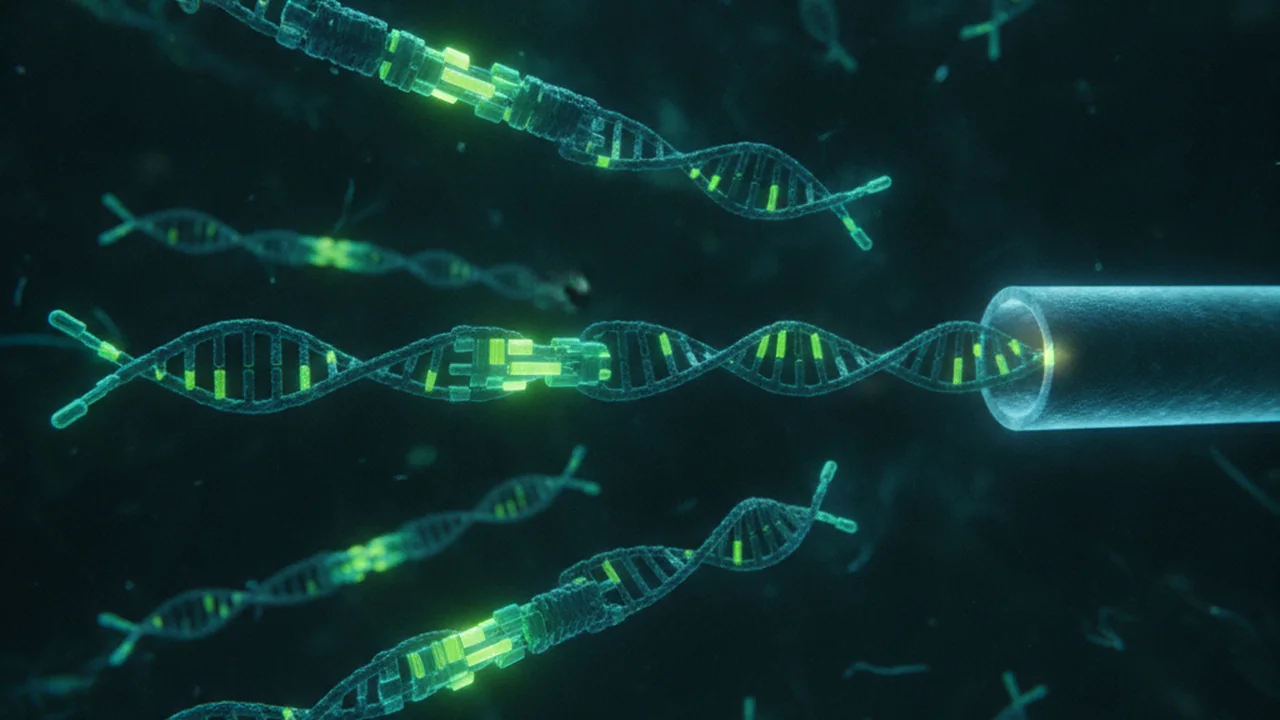
After barcoding and pooling, the library needs sequencing adapters. These adapters help the nanopore system recognize, capture, and process the DNA molecules. Visually, imagine pooled barcoded DNA fragments with specialized sequencing adapters approaching, ready to be joined.
Nanopore adapters often contain motor proteins that actively pull the DNA through the pore, as well as specific sequences that facilitate initial binding to the flow cell membrane.
Adapter Ligation Reaction: Covalently Linking Adapters
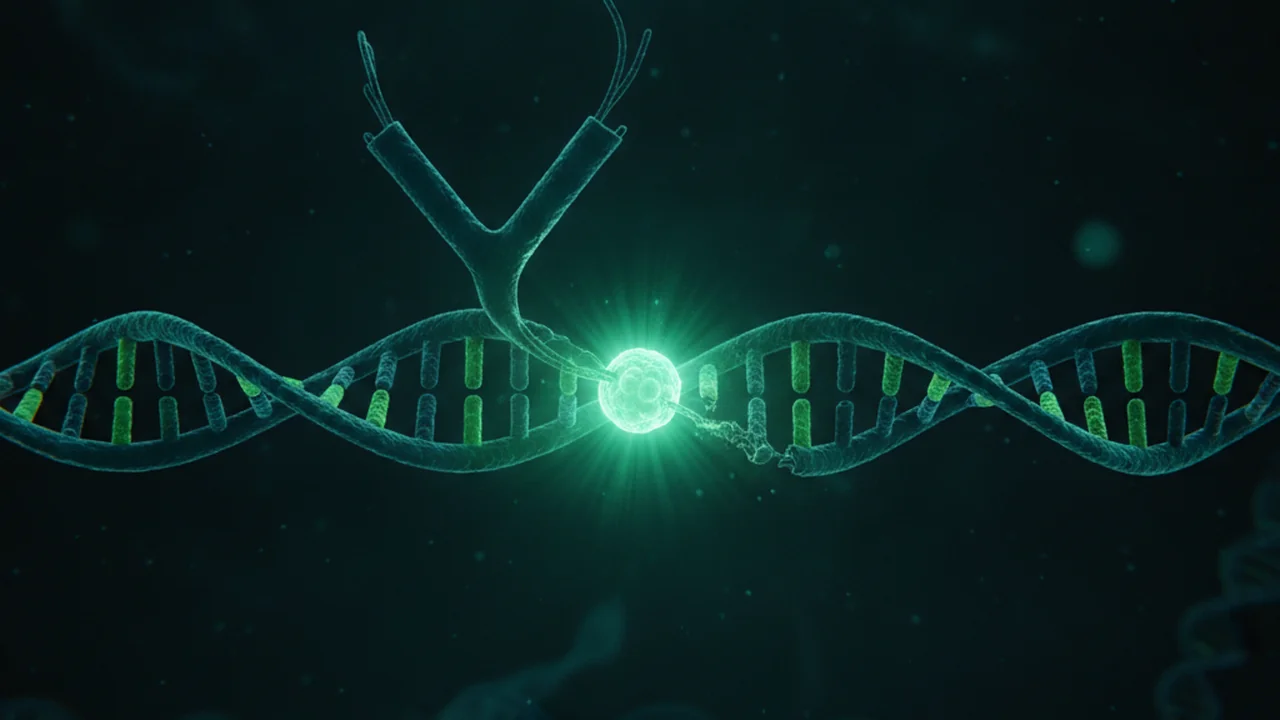
The adapter ligation reaction is where these crucial adapters are physically attached to your prepared DNA. In this reaction, the pooled barcoded sample is mixed with adapter mix, ligation buffer, and Quick T4 DNA ligase. The enzyme attaches adapters to the prepared DNA ends. The visual representation of this would be a LoBind tube receiving each of these components in sequence.
Consider the role of T4 DNA ligase in this process. How does an enzyme like this ensure the adapters are correctly and efficiently attached to the DNA ends?
Want to go deeper? The science behind T4 DNA ligase…
T4 DNA ligase is an enzyme isolated from the T4 bacteriophage that catalyzes the formation of a phosphodiester bond between juxtaposed 5′-phosphate and 3′-hydroxyl termini in DNA. In adapter ligation, it’s essential for covalently linking the synthetic sequencing adapters to the blunt or sticky ends of the DNA fragments in your library, creating a stable molecule ready for sequencing. This enzyme requires ATP as a cofactor to perform its ligating function.
Cleanup and Elution: Ensuring Purity
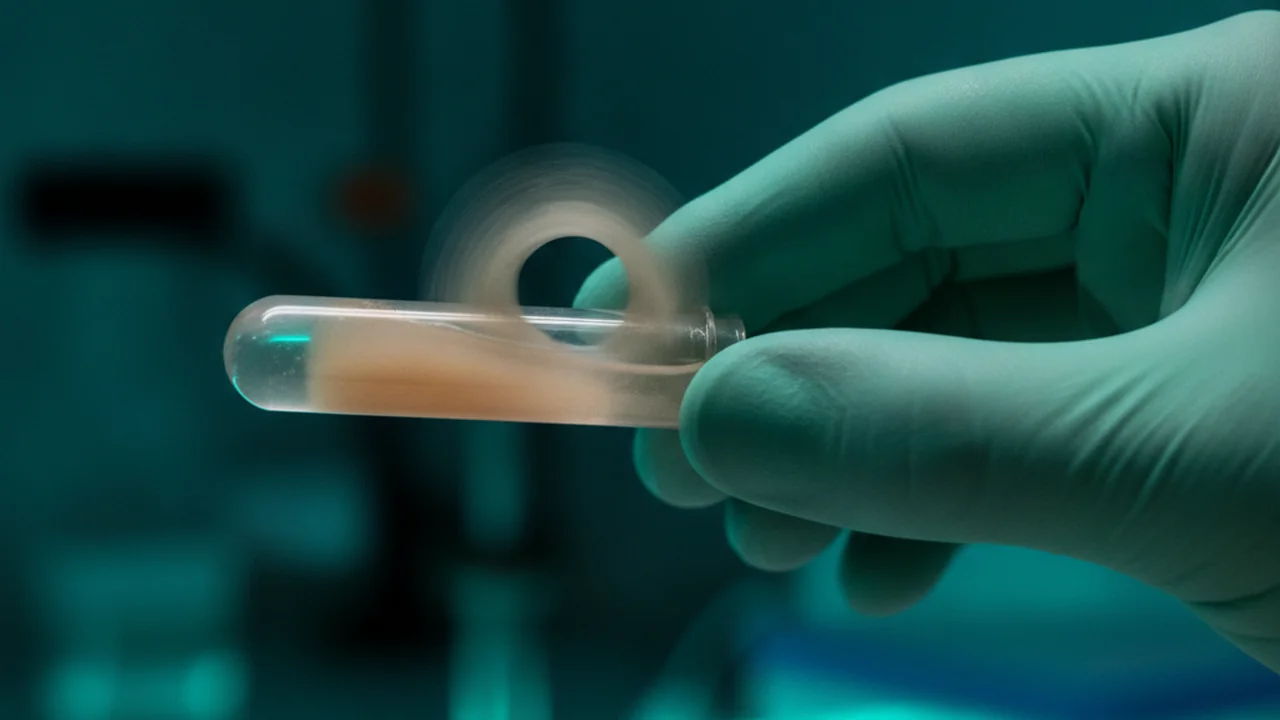
Following ligation, a final bead cleanup removes unligated adapters and reaction components. This purification step is critical to prevent contamination and ensure only the properly adapted DNA library proceeds to sequencing. The visual process involves an AMPure bead cleanup with Long Fragment Buffer washes, a brief drying step, and finally, elution in a small volume of 15 microliters elution buffer.
Imagine you’re developing a new bead cleanup protocol. What are two variables you would meticulously optimize to ensure maximum removal of contaminants while minimizing loss of your valuable DNA library?
- Bead-to-sample ratio: How would altering this ratio (e.g., increasing or decreasing bead volume relative to sample) affect cleanup efficiency versus DNA recovery?
- Wash steps: What considerations go into choosing the wash buffer (e.g., ethanol concentration) and the number of washes to achieve optimal purity without DNA loss?
- Sequencing adapters are crucial for Nanopore system recognition and processing.
- The T4 DNA ligase enzyme covalently attaches these adapters to the prepared DNA fragments.
- A final bead cleanup removes unligated adapters and ensures the purity of the DNA library.
Qubit Quantification and Loading Amount: Precision Matters
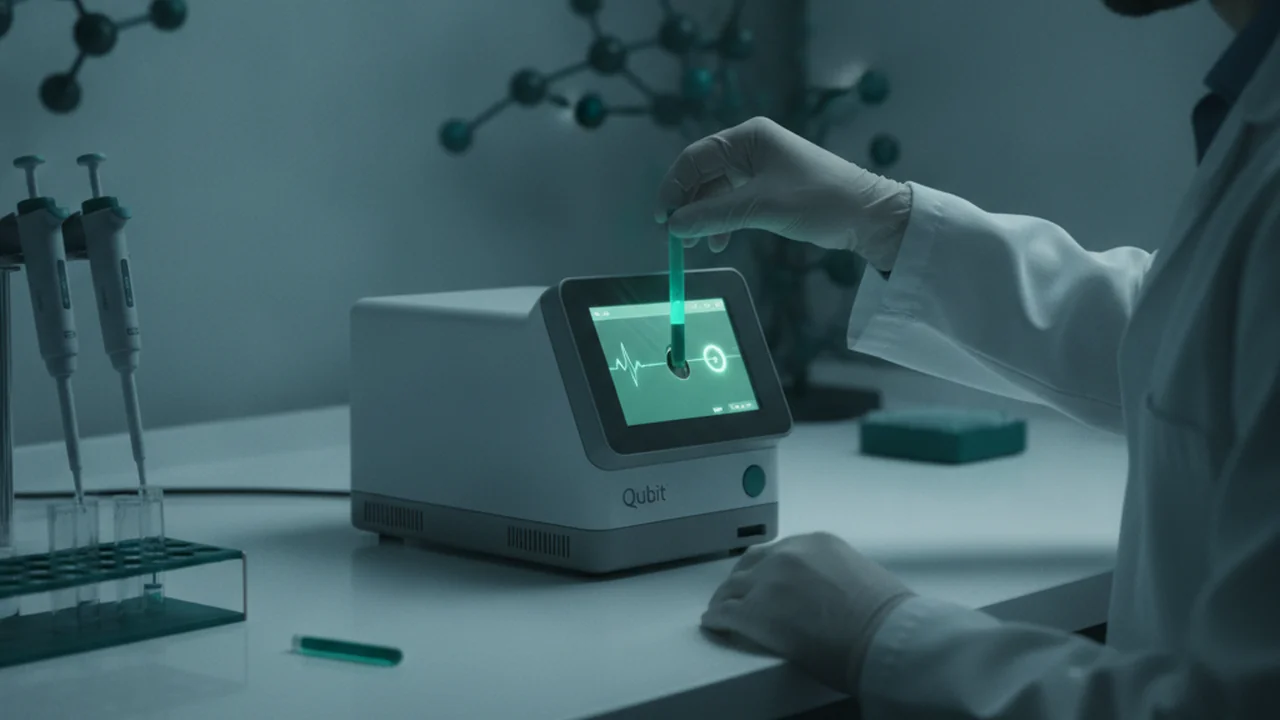
The final library is quantified using a Qubit fluorometer. This device accurately measures DNA concentration. The DNA mass (in nanograms) is often converted into femtomoles using a calculator-style interface, as femtomoles represent the number of molecules, which is more relevant for pore occupancy. The protocol recommends loading about five to ten femtomoles of prepared library onto the flow cell.
A femtomole is a unit of amount of substance, equal to 10-15 moles. In DNA sequencing, quantifying in femtomoles is often preferred over nanograms because it provides a direct measure of the number of DNA molecules, which is more directly relevant to how many pores will be occupied during sequencing.
In a research or diagnostic lab, accurate quantification with a Qubit fluorometer (or similar high-sensitivity device) is non-negotiable. Loading too much or too little DNA can significantly impact your sequencing run, leading to suboptimal data quality, reduced throughput, or even wasted reagents and time.
Why is it more useful to quantify DNA in femtomoles rather than nanograms when preparing for Nanopore sequencing?
Nanopore Device Overview: How it Works
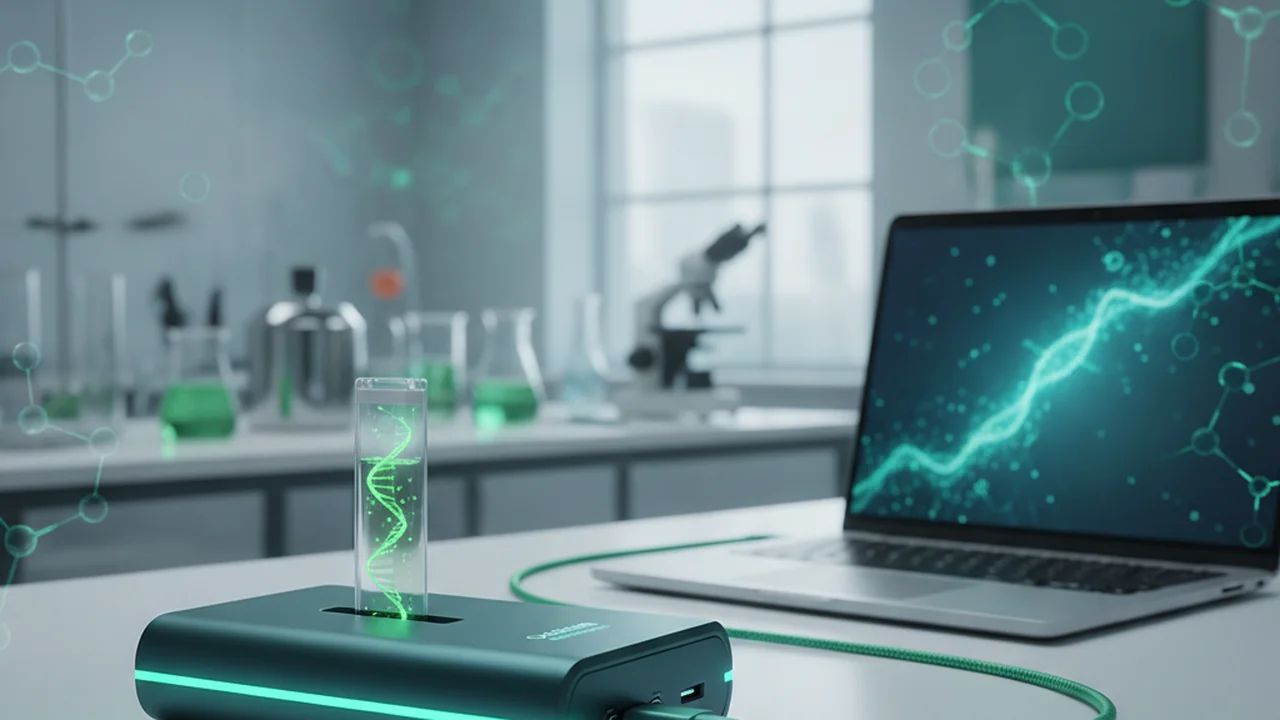
Oxford Nanopore sequencing reads DNA as molecules pass through tiny nanopores. These pores are embedded in a membrane, and as DNA traverses them, they cause characteristic changes in electrical signal. These changes are converted into sequence data by sophisticated algorithms. Imagine a hero shot of an Oxford Nanopore MinION or Mk1C-style device, showing DNA strands passing through the nanopores and signal traces appearing.
Flow Cell Check and Priming: Preparing for the Run
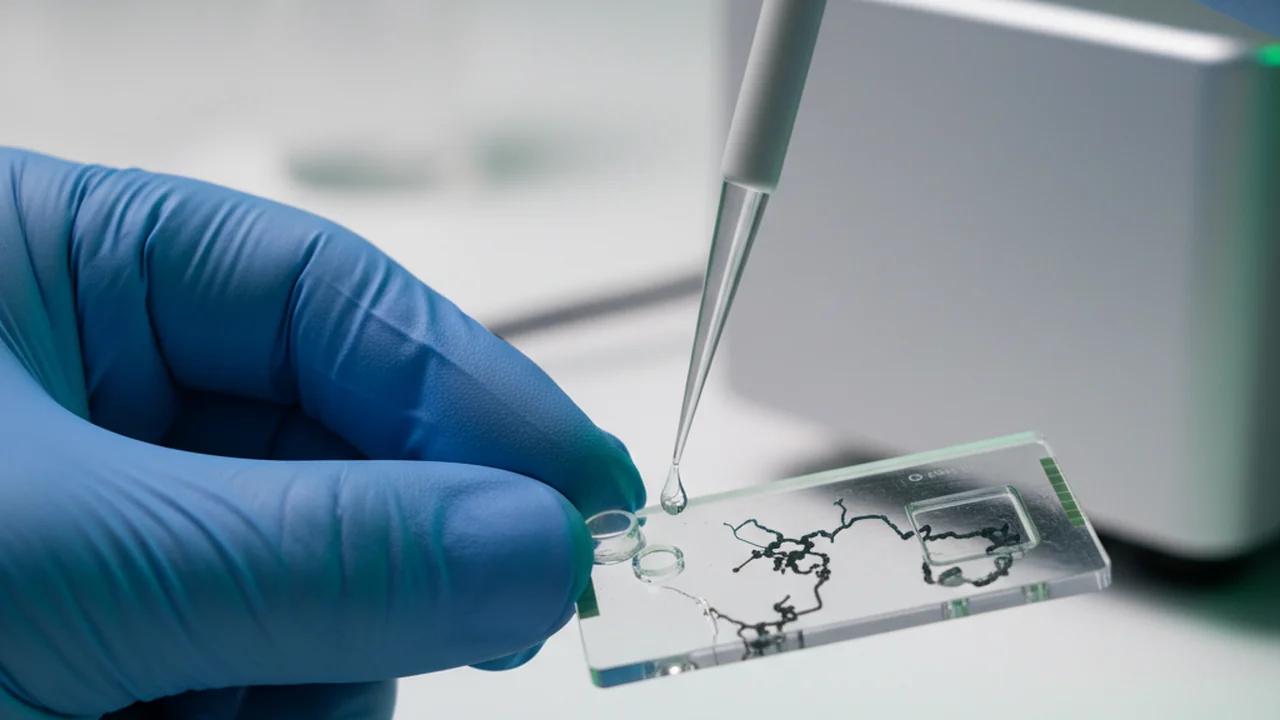
Before loading the library, the flow cell must be checked and primed. This involves carefully inspecting the flow cell, opening priming ports, and meticulously pipetting buffer to prepare the system. Careful handling protects the pores and prepares the fluid path for sequencing. This step requires photorealistic hands demonstrating precision and care.
Careful handling protects the pores and prepares the fluid path for sequencing.
Reflect on the importance of meticulousness in laboratory procedures like flow cell priming. How might a seemingly minor error in this step cascade into significant problems for the entire sequencing experiment, from data quality to cost?
Which enzyme is crucial for covalently attaching sequencing adapters to prepared DNA fragments during library preparation?
Loading more than 20 fmol of DNA library onto a Nanopore flow cell can primarily lead to what negative outcome?
Successful Nanopore sequencing hinges on precise adapter ligation, thorough bead cleanup, and accurate femtomole-based quantification to ensure the optimal amount of prepared library is loaded onto a properly primed flow cell, maximizing read capture efficiency.