Lab Foundations: Metric System, Volume, Weight, and Pipetting
LEARNING OUTCOMES
- Convert between milli, micro, and nano units.
- Select the correct micropipette for a given volume.
- Describe the first stop and second stop on a pipette.
- Explain why weighing water can test pipetting accuracy.
In any scientific endeavor, accuracy and precision are paramount. From preparing reagents to measuring genetic material, the success of an experiment often hinges on exact measurements. This lesson lays the groundwork for these essential lab skills, starting with the universal language of measurement: the metric system.
The metric system is the international standard for measurement, vital for consistency and reproducibility in scientific research. Its logical, base-10 structure simplifies conversions and minimizes errors.
Prefixes and Scale
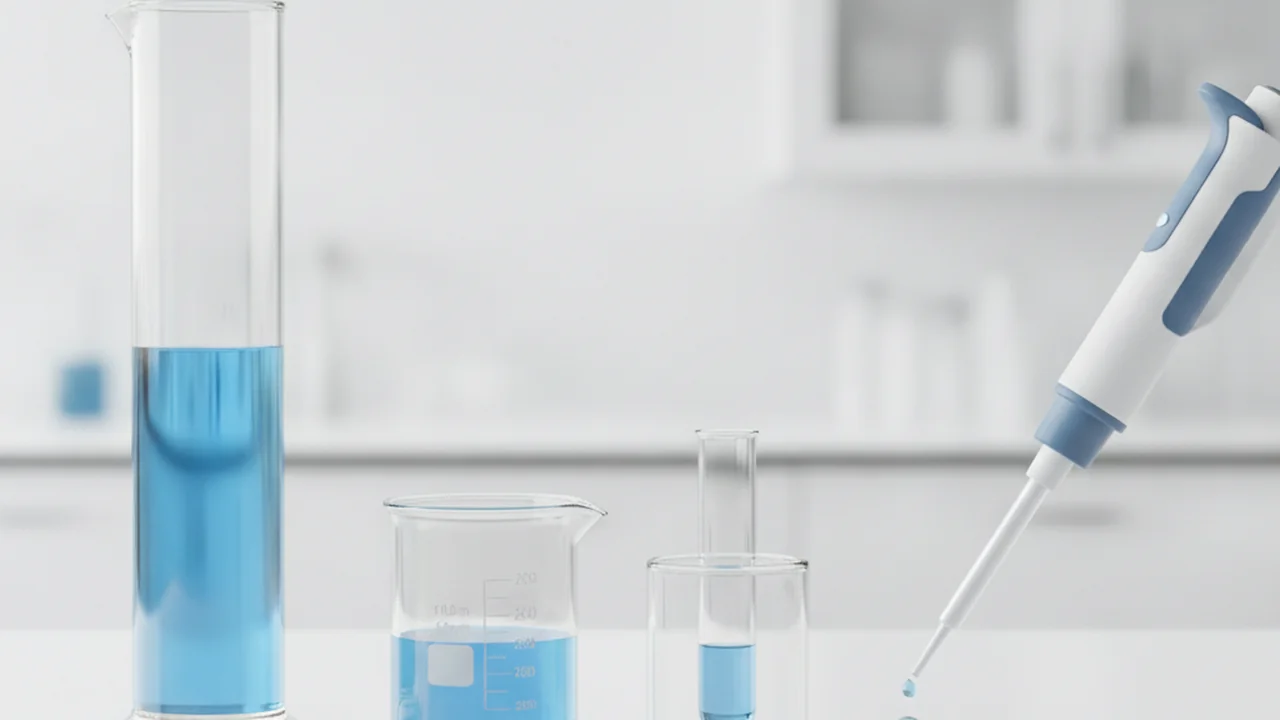
The metric system uses a consistent prefix system for both volume and weight measurements. Knowing the order of prefixes allows easy conversion by multiplying or dividing by 1000 between adjacent units.
Prefix Table:
- liter (L) or gram (g) — base unit — value: 1
- milli (ml or mg) — value: 1,000 per base unit
- micro (µl or µg) — value: 1,000,000 per base unit
- nano (nl or ng) — value: 1,000,000,000 per base unit
Consider how this systematic approach simplifies complex conversions compared to other measurement systems. How might this consistency reduce errors in a busy lab?
Want to go deeper? The Universal Language of Science
The metric system’s global adoption in science isn’t just a coincidence. Its base-10 structure makes calculations straightforward, while its standardized units ensure that a “liter” in one lab means the exact same volume in any other, anywhere in the world. This eliminates ambiguity and facilitates international collaboration and data sharing, making it the bedrock of modern scientific communication.
Practice converting between common metric units used in the lab.
- Convert 2.5 ml to microliters (µl).
- Convert 1500 ng to micrograms (µg).
- If you need 0.003 L of a solution, how many milliliters (ml) is that?
Volume Examples:
1 ml = 1,000 µl
1 µl = 1,000 nl
500 µl = 0.5 ml
1,000 ml = 1 L
- The metric system uses consistent prefixes (milli, micro, nano) based on powers of 1000.
- Conversions between adjacent units involve multiplying or dividing by 1000.
How many microliters (µl) are in 0.75 milliliters (ml)?
Micropipette Sizes:
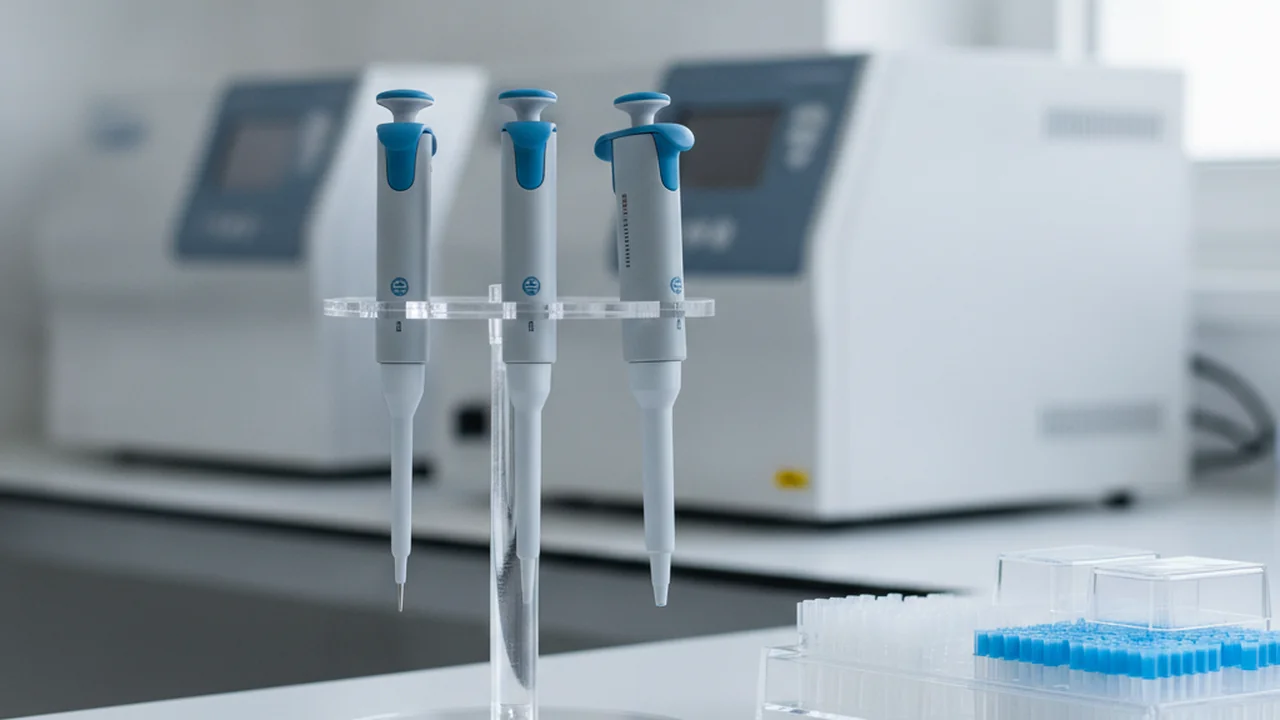
Micropipettes are essential tools for accurately measuring and transferring small volumes of liquid in the lab. Selecting the correct pipette for the job is crucial for precision.
- P10: 0.5–10 µl
- P20: 2–20 µl
- P200: 10–200 µl
- P1000: 100–1,000 µl
The modern micropipette, with its adjustable volume and disposable tips, was invented in 1957 by Dr. Heinrich Schnitger. Its widespread adoption revolutionized molecular biology, enabling precise handling of minute sample volumes.
Using a P200 micropipette to measure a volume of 5 µl because it’s “close enough” or to avoid changing pipettes.
Always select the smallest volume pipette that can accurately handle your desired volume. For 5 µl, a P10 or P20 would provide significantly greater accuracy and precision than a P200, which operates best in its mid-to-upper range.
Beyond the Lab: Metric Precision in Everyday Life
While we focus on laboratory applications, metric precision is critical in many fields. From pharmacists accurately dispensing medication in milligrams to engineers designing micro-components, understanding and applying metric measurements ensures safety, functionality, and reliability.
Which micropipette would be the most appropriate choice for accurately pipetting a volume of 15 µl?
The metric system uses a consistent prefix system for both volume and weight measurements.
Reflect on a time when precision (or lack thereof) significantly impacted an outcome in your life or a hypothetical scenario. How might understanding the metric system and proper tool selection have altered that situation?
Mastering the metric system’s prefixes and understanding micropipette selection are fundamental to achieving accuracy and reproducibility in laboratory experiments.
Basic Pipetting Protocol:
Metagenomics Mini-Course — SLS Course Source Document
Page 6