How do we ensure that our scientific exploration begins on the right foot, literally, when the “ground truth” of microbial communities is what we’re after?
Before any lab analysis can begin in a metagenomics study, a critical first step must be meticulously planned and executed: site selection and field sampling. The quality of your data, the validity of your conclusions, and the impact of your research all hinge on the careful choices made at this initial stage. This lesson will guide you through the essential considerations for transforming a broad community question into a precisely collected soil sample, setting the foundation for robust metagenomic analysis.
Learning Outcomes
- Choose a public, accessible, safe site.
- Frame a site selection hypothesis.
- Record GPS and photographic evidence.
- Collect three soil cores while avoiding contamination.
Metagenomics is the study of the structure and function of entire nucleotide sequences isolated and analyzed from all organisms (typically microbes) in a bulk sample.
Often, metagenomics studies focus on specific communities of microorganisms, such as those found on human skin, in soil, or in water. For our purposes, we’ll be focusing on soil samples, which present a unique set of considerations for field sampling.
Site Selection Criteria: A Foundation for Reliable Data

Choosing the right location is paramount. It’s not just about convenience; it’s about ethical considerations, logistical feasibility, and scientific rigor. Adhering to strict criteria ensures that your data is meaningful and that your process is responsible.
- Select only publicly accessible sites (private property requires institutional approval)
- Sites must be within your immediate community
- Minimum required DNA yield must be obtainable without PCR amplification
- All sites must be safely accessible — samples collected while standing on your feet
The requirement for institutional approval for private property isn’t just bureaucratic; it protects both researchers and landowners, ensuring legal access and ethical data collection practices. This is especially crucial in citizen science, where community trust is vital.
Based on the Site Selection Criteria, identify three potential sampling sites in your immediate community. For each site, briefly note:
- Why it meets the “publicly accessible” and “safely accessible” criteria.
- What potential microbial communities you might expect to find there and why.
Why is selecting a publicly accessible and safe site not just a logistical concern, but also an ethical one in the context of citizen science and research?
Want to go deeper? The science behind “no PCR amplification”
PCR (Polymerase Chain Reaction) is a technique used to amplify specific DNA sequences. While invaluable in many areas of molecular biology, direct sequencing of environmental DNA (eDNA) from a bulk sample without initial PCR amplification is often preferred in metagenomics. Why? PCR can introduce bias, preferentially amplifying some DNA sequences over others, which can skew the representation of microbial diversity in your sample. By aiming for a high enough initial DNA yield, researchers can move directly to library preparation and sequencing, providing a more accurate snapshot of the original microbial community’s genetic makeup.
Site Selection Questions to Address: Framing Your Hypothesis
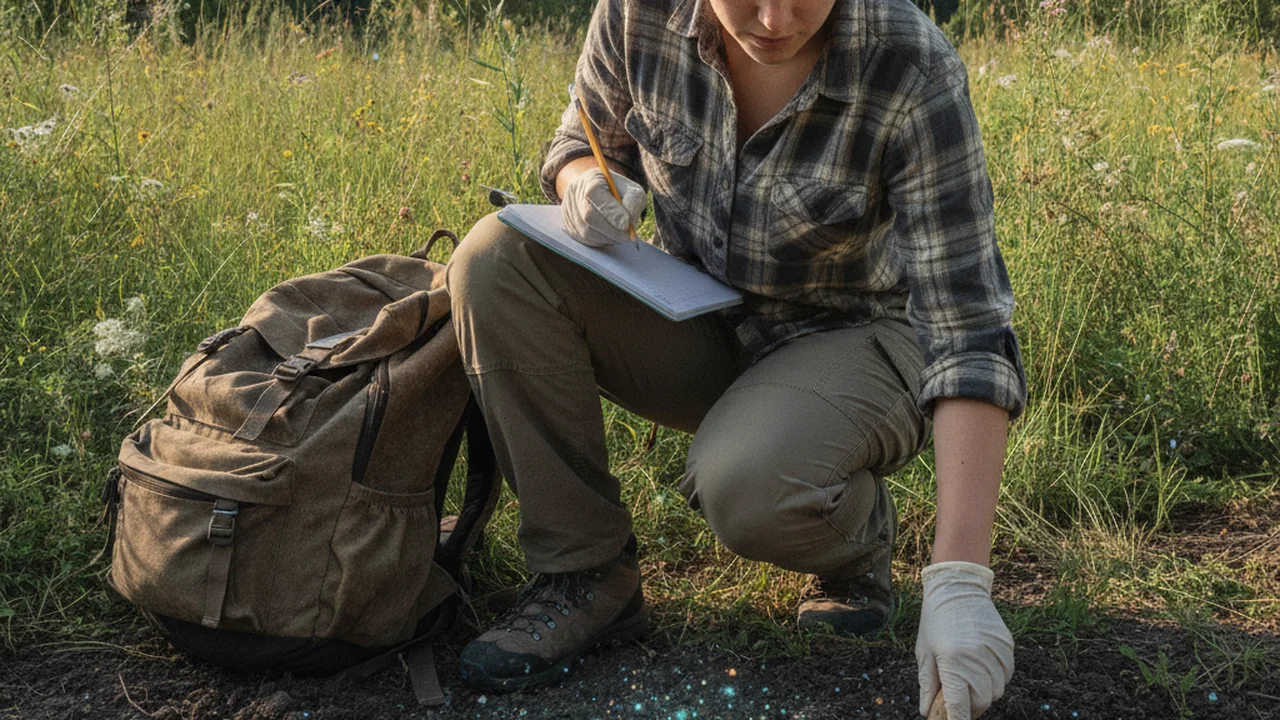
Beyond simply meeting criteria, a successful metagenomics study starts with a well-defined question and a testable hypothesis about your chosen site. These questions guide your sampling strategy and data interpretation:
- A. Why is this site important to select?
- B. What microorganisms do you expect to find?
- C. Why would those microorganisms be in high abundance?
- D. Is the discovery of expected microorganisms a positive or negative outcome?
- E. What is the importance of presence (positive), or what remediation is possible (negative)?
- F. What upstream conditions might change your data over time?
Choose one of the “Site Selection Questions to Address” (A-F) and elaborate on how you would approach answering it for a hypothetical site. Consider the implications of your expected findings and what further questions might arise.
Any soil sample is equally useful for metagenomics, as long as it contains DNA.
Strategic site selection, driven by clear hypotheses and adherence to ethical/logistical criteria, is crucial for generating meaningful and interpretable metagenomics data. A random sample yields random insights.
Understanding soil metagenomics can have profound real-world impacts, from discovering novel antibiotics produced by soil microbes to optimizing agricultural practices for healthier crops, and even assessing environmental restoration efforts by tracking shifts in microbial communities.
- Site selection requires adherence to criteria like public access, safety, and sufficient DNA yield.
- Framing specific questions about your site helps develop a strong hypothesis for your study.
Sample Collection Protocol: Precision in the Field
Once your site is selected and your hypothesis is framed, the physical act of collecting samples must follow a strict protocol to ensure data integrity and minimize contamination.
- Collect your sample on your scheduled lab day
- Record GPS coordinates before sampling
- Photograph the site and surrounding areas
- Put on gloves; keep your plastic bag open
Beyond simply following steps, what is the underlying principle behind recording GPS coordinates and photographic evidence during sampling? How does this contribute to the scientific rigor of your study?
Which of the following is a critical criterion for selecting a site for metagenomics sampling?
Practitioner Tip: Avoiding contamination during field sampling is paramount. Even a tiny speck of foreign material or DNA from your own skin can drastically alter your results. Always wear gloves, use sterile equipment, and prepare your collection bags carefully.
Metagenomics is used to study specific communities of microorganisms, such as those on human skin, in soil, or in water.
What is a primary reason for recording GPS coordinates and photographing a sampling site before collection?
The success of any metagenomics study fundamentally relies on meticulous site selection, informed by a clear hypothesis, and precise execution of field sampling protocols to ensure the integrity and relevance of the collected data.