How can your credit decisions in high school and college impact your financial opportunities—and costs—for years to come?
Why Credit Matters: A Tale of Two Graduates

Meet Maya and Jordan, two recent Missouri State University grads. They started with the same degrees and salaries—but three years later, their financial paths are miles apart. The difference? How they handled credit.
Maya vs. Jordan: Real-World Credit Outcomes
- Maya: Used her credit card responsibly, paid bills on time, had a strong credit score. She was approved for an apartment and received a low-interest car loan.
- Jordan: Missed payments, carried high balances, and made late loan payments. His poor credit score led to higher costs, denied applications, and extra stress.
Over three years, Jordan paid $6,110 more for the same purchases and faced more barriers—all because of credit decisions made during college.
In Missouri, landlords and car dealerships routinely check your credit score before approving leases or loans. Even a small mistake can cost you thousands in extra fees or higher interest rates.
Part 1: What Is Credit?
Credit is the ability to borrow money or access goods and services with the promise to pay later. It’s a tool that makes big purchases possible, but it comes with responsibility.
- The lender provides money or goods now.
- The borrower agrees to pay back—usually with interest.
- Terms specify the amount, interest rate, payment schedule, and fees.
- Failing to repay can mean penalties, damaged credit, or even legal action.
Why Credit Exists
- Lets you buy things when you don’t have the cash
- Enables purchases like cars or homes
- Builds your financial history
- Can provide rewards and protection
The Tradeoff
- Benefit: Get things now, pay later
- Cost: Interest increases your total expenses
- Risk: Misusing credit can lead to debt
The ability to borrow money or access goods/services with the understanding you’ll pay later—often with interest.
Types of Credit
- Revolving Credit: Credit cards, HELOCs. Borrow, repay, borrow again up to your limit.
- Installment Credit: Auto loans, mortgages, student loans. Fixed payments and end date.
- Open Credit: Utility bills, cell phone bills. Pay in full each month; late fees if missed.
Most Missouri students encounter installment (student loans), revolving (credit cards), and open (utilities/rent) credit before age 25.
Want to go deeper? The science behind credit scores
Credit scores use mathematical models to predict how likely you are to repay debt. The FICO formula weighs payment history, amounts owed, length of credit history, new credit, and types of credit. Lenders rely on these scores to decide whether to approve loans and at what rates.
Have you ever made a purchase using credit or debit? How did you decide which to use?
Part 2: Credit vs. Debit
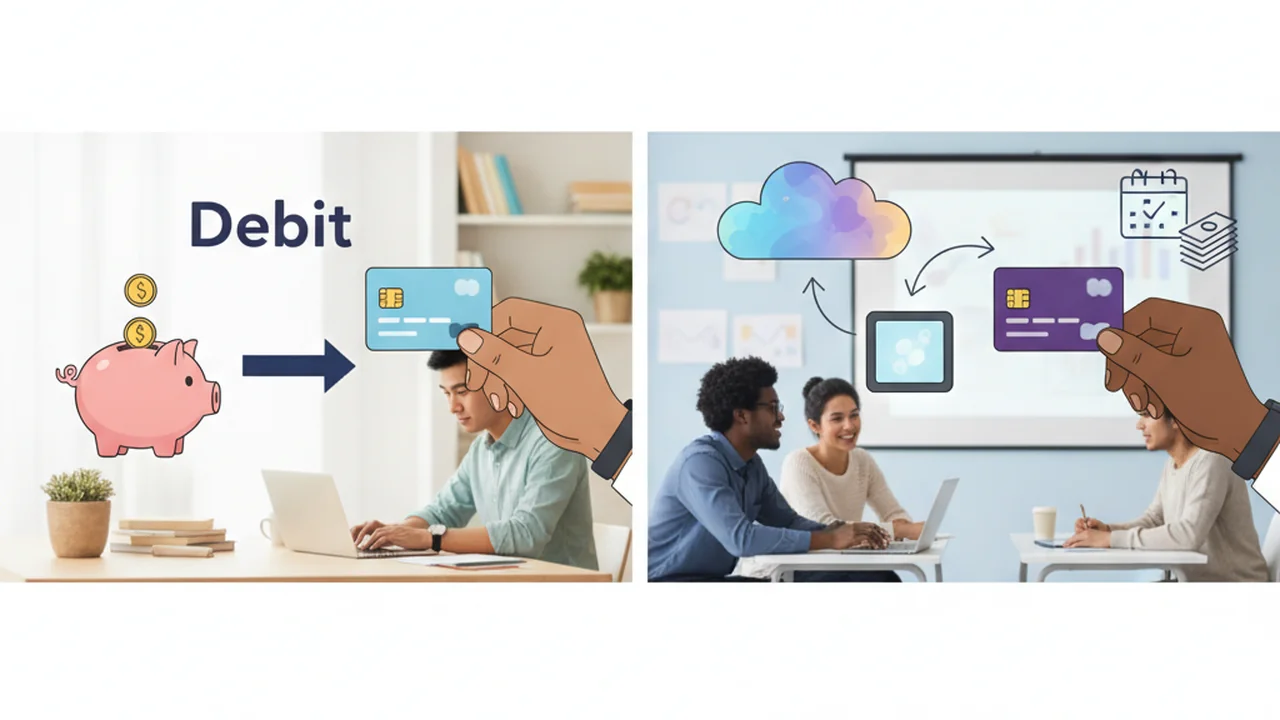
How Debit Cards Work
- Connected to your checking account
- Money withdrawn immediately
- No borrowing or interest
- Can overdraft if balance is too low—fee applies
A payment card linked directly to your checking account; funds are withdrawn instantly with each transaction.
How Credit Cards Work
- Borrow money from card issuer
- Pay monthly bill (full or partial)
- Interest charged on unpaid balance
- Builds credit history and offers rewards
Credit vs. Debit: What’s the Difference?
- Debit uses your money; credit uses borrowed funds
- Debit has no interest; credit may charge interest
- Credit cards can impact your credit score; debit does not
- Credit cards offer stronger fraud protection and rewards
Missouri students often use debit for everyday spending and credit for larger purchases like textbooks or flights. Paying your credit card in full every month avoids interest and builds positive credit history.
Using a debit card helps build your credit score.
Debit card transactions do not affect your credit score—only credit accounts and payment history are reported to credit bureaus.
What advantages does a credit card offer over a debit card when making online purchases?
Part 3: Consumer Credit Sources
Credit Cards
- Student Credit Cards: Lower limits, easier approval, rewards for students
- Secured Credit Cards: Requires deposit; helps build or repair credit
- Rewards Credit Cards: Cash back, points, or travel rewards—usually for those with good credit
- Store Credit Cards: Only usable at specific retailers; often high interest rates
Key Terms: APR (annual interest rate), credit limit, minimum payment, grace period, annual fee
Why might a student choose a secured credit card over a rewards card?
Auto Loans
- Installment loans for buying vehicles
- Car is collateral; lender can repossess if you don’t pay
- Interest rate depends on your credit score
- Local banks and credit unions often offer better rates than dealers
Missouri Example: Buying a used car with good credit saves you thousands compared to poor credit.
Student Loans
- Federal Loans: Subsidized/unsubsidized, fixed rates, flexible repayment
- Private Loans: Variable rates, credit check required, fewer protections
- Always look for scholarships and grants first!
Missouri State Example: A freshman facing $19,000/year in costs can use a mix of grants, work-study, and loans to cover expenses.
- Understood the difference between credit and debit
- Explored types of credit—revolving, installment, and open
- Recognized Missouri-specific credit sources and scenarios
Part 4: Creditworthiness and Credit Scores
Your creditworthiness—how likely you are to repay borrowed money—affects nearly every major financial decision, from renting an apartment to buying a car.
- Payment history: Did you pay bills on time?
- Amounts owed: How much do you owe compared to your limits?
- Length of credit history: How long have you used credit?
- New credit: Have you recently applied for new credit?
- Types of credit: Do you have a mix (cards, loans, etc.)?
A three-digit number (typically 300–850) that reflects your creditworthiness, based on your credit history and current credit usage.
What are the five major factors in your FICO credit score?
Tap to revealPayment history, amounts owed, length of credit history, new credit, types of credit used.
What is the difference between revolving and installment credit?
Tap to revealRevolving credit lets you borrow, repay, and borrow again up to a limit; installment credit is a fixed amount repaid in set payments.
What is a secured credit card?
Tap to revealA credit card requiring a cash deposit as collateral; helps build or repair credit.
How might your credit score affect your ability to rent an apartment or buy a car in Missouri?
Compare how credit scores impact loan costs:
- Pick a car price ($18,000) and loan term (60 months).
- Use two APRs: 5.9% (good credit) and 12% (poor credit).
- Calculate monthly payments and total interest for each.
- Write down the difference in total cost.
Paying your credit card bill on time every month is the most important factor in your .
Project: Design a Credit-Building Plan
Course Driving Question: How can I build a realistic 10-year financial plan for my life after high school that can survive real-world trade-offs, setbacks, and opportunities?
Your project move: Create a safe path for your Launch Profile to establish and protect credit.
- Set a realistic credit goal and timeline without promising an exact score.
- Choose actions for payment history, utilization, account age, credit mix, and new applications.
- Estimate how one missed payment or high balance could affect future borrowing costs.
Add to your Missouri Money Map: A 12-month credit-building checklist and monitoring schedule.
Ask a partner to flag any action that depends on debt your profile does not need.
Think ahead to your first apartment or car purchase. What steps can you take now to build a positive credit history and avoid the mistakes that cost Jordan thousands of dollars?
Which factor has the greatest impact on your credit score?
Your credit decisions in high school and college have REAL financial consequences that cost thousands of dollars.
Your credit score directly affects your ability to rent, buy, and borrow—making smart credit decisions early can save you thousands and open doors in your future.
Building and maintaining good credit starts with paying bills on time, keeping balances low, and using credit responsibly.
Understanding interest (from Unit 4) is critical for managing credit—interest charges are a major part of credit card and loan costs.
The Shift
- Credit choices made as a student can have lasting financial impacts—both positive and negative.
- Knowing how credit works and how your score is calculated empowers you to avoid costly mistakes.
- Responsible credit use opens opportunities for better rates, easier approvals, and less stress.