The $3,000 Laptop That Cost $6,000
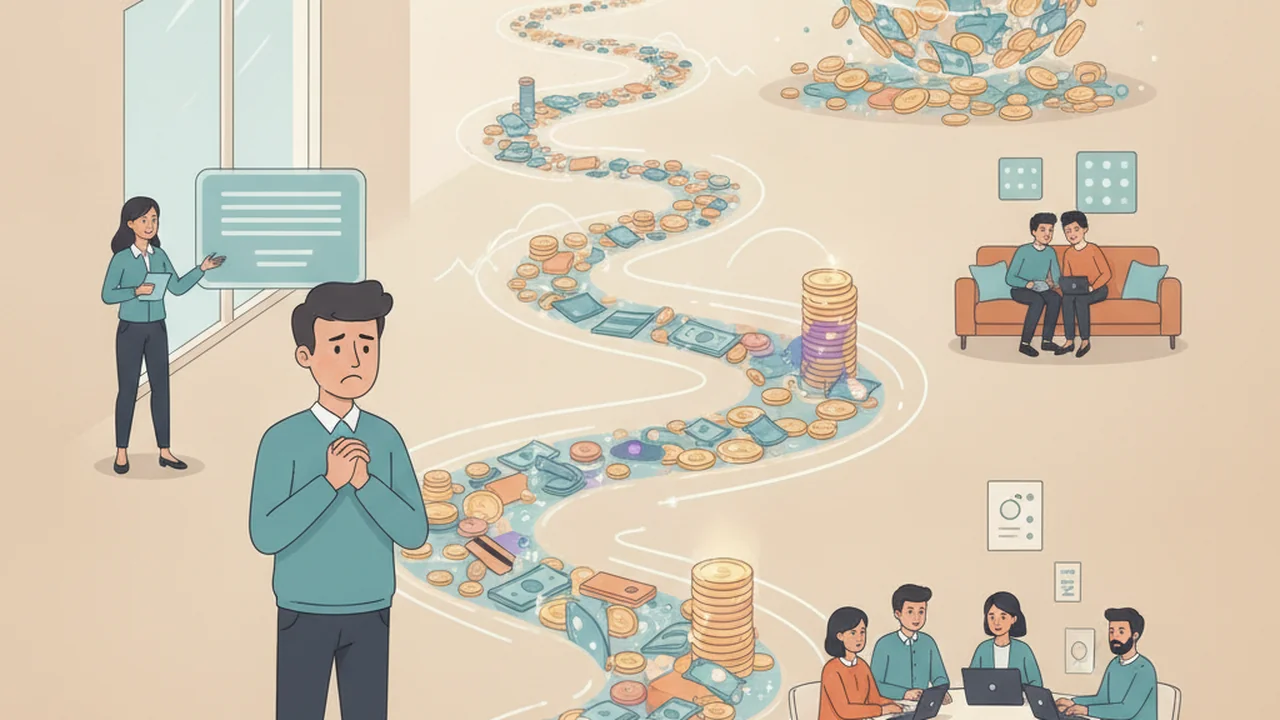
Four Missouri students buy the same $3,000 laptop with very different results: one pays cash, one uses a credit card, one takes a store “0% interest” deal, and one gets a credit union loan. The final costs range from $3,000 to nearly $6,000—just based on how they chose to pay. Understanding how types of credit and debt work can literally save you thousands on big purchases.
Alex pays cash ($3,000)—done. Devon uses a credit union loan and pays $3,322 in the end. Casey takes a “0% for 12 months” store deal, can’t pay in time, and ends up at $3,897.34. Blake uses a credit card, pays only the minimum, and the final bill is $5,946.88—nearly double the laptop’s sticker price! The difference? The type of credit, interest rates, and payment strategies. Let’s break down how credit actually works.
The yearly cost of borrowing money, including interest and most fees, expressed as a percentage—your key tool for comparing credit offers.

Missouri law allows payday loans with APRs over 400%. That means a small loan can spiral into massive debt if you’re not careful!
1. Comparing Types of Credit
Credit comes in many shapes and sizes. The interest rate you pay, the fees, and the risk to the lender all determine how expensive your loan will be.
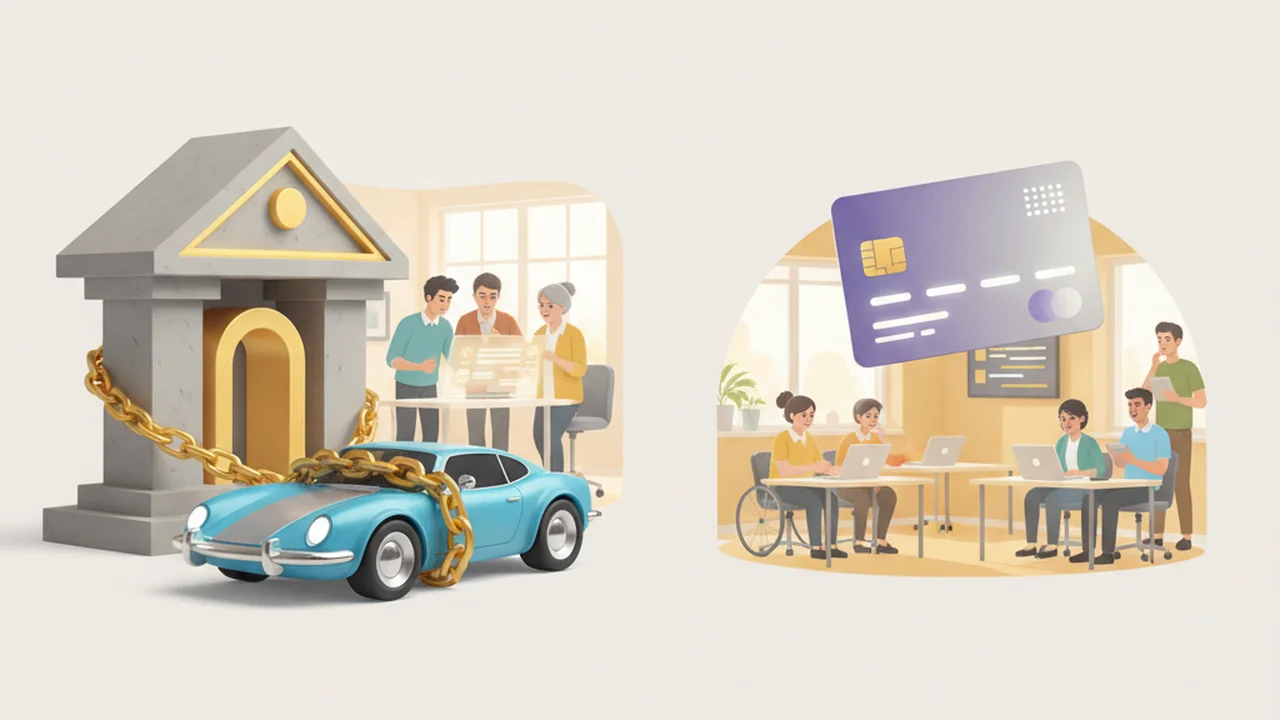
Secured debt is backed by collateral (like a car or house), so it usually has lower interest rates. Unsecured debt isn’t tied to an asset—think credit cards or personal loans—and generally costs more.
Buying a car? An auto loan is “secured” because the car is the collateral. Miss payments, and the lender can repossess the vehicle. Credit cards are “unsecured”—if you don’t pay, your credit score tanks, but there’s no specific item for the lender to take back.
APR: The True Cost of Credit
- APR includes both the interest rate and most fees.
- Always compare APRs, not just the advertised interest rates.
- APR does not usually include late fees or over-limit fees.
What does “APR” stand for in personal finance?
Tap to revealAnnual Percentage Rate—the total yearly cost of borrowing money, including interest and most fees.
What’s the main difference between secured and unsecured debt?
Tap to revealSecured debt uses collateral (like a car or house); unsecured debt does not require collateral.
Why do payday loans have such high APRs?
Tap to revealPayday loans are very risky for lenders and unsecured, so they charge extremely high interest to cover defaults—sometimes 400% APR or more!
“Minimum payments are a trap: you can double the cost of your purchase and stay in debt for years if you only pay the minimum on a credit card.”
How APR Impacts Your Wallet
- High APR = high total cost over time
- APR differences can add up to thousands—even on moderate loans
Want to go deeper? The math behind loan payments and APR
To calculate a loan monthly payment, use:
M = P × [r(1+r)n] / [(1+r)n - 1]
Where P = principal, r = monthly interest rate (APR ÷ 12 ÷ 100), n = number of months. Or use the PMT function in Excel/Google Sheets to check different loans instantly.
How do you think your credit score affects the APRs you’re offered on loans?
APR in Missouri: Real Examples
- Auto loan ($25,000, 60 months): APR ranges from 4.5% (excellent credit) to 14% (poor credit)
- Poor credit can mean paying $6,900 more than someone with excellent credit—for the same car.
- Credit cards: 15–29.99% APR depending on credit score
- Payday/title loans: 250%–600%+ APR—always a dangerous last resort
Why do lenders charge higher interest rates to some borrowers?
2. Calculating Total Purchase Price
The price on the tag is just the start if you buy on credit. Add up principal, interest, fees, and down payments to see the real cost.
Missouri auto dealers sometimes focus on “low monthly payments”—but lower payments usually mean longer terms and much higher total cost. Always check the total amount you’ll pay over the life of a loan.
Loan Example: New vs. Used Car
- New Honda Civic ($28,000): $4,000 down, $24,000 financed at 5.9% APR for 60 months = $31,800.40 total paid
- Used Toyota Camry ($18,000): $2,000 down, $16,000 financed at 7.5% APR for 48 months = $20,559.68 total paid
How does the loan term (number of months) affect the total interest you pay?
“A lower monthly payment always means a better deal on a loan.”
Lower payments usually mean a longer loan term and much more total interest paid. The best deal is the lowest total cost—not just the lowest payment!
The is the amount you borrow on a loan, while the is the cost you pay for borrowing that money.
Credit Cards vs. Store Financing: The Traps
- Credit cards: Minimum payments can stretch debt for years and nearly double the cost
- Store “0% interest” deals: Miss the deadline, and you may owe all the interest retroactively (at rates like 26.99%)
- Payday/Rent-to-own: Massive effective APRs—avoid if at all possible
Calculate how much extra you’d pay for a $10,000 auto loan at 4% APR versus 12% APR over 60 months.
- Use an online loan calculator or spreadsheet to find monthly payments and total paid for both APRs.
- Subtract the lower total from the higher total to see the difference.
- You can now calculate total loan cost using APR and loan terms.
- You understand why secured loans usually have lower rates than unsecured loans.
Which type of debt typically has the highest APR and is the riskiest for borrowers in Missouri?
3. When to Use Different Types of Credit
- Secured loans (auto, mortgage): Best for large purchases with collateral; lower rates
- Credit cards: Convenient but expensive if not paid in full monthly; best for small/short-term needs
- Personal loans: Useful for emergencies or consolidating debt; rates depend on credit score
- Student loans: Designed for education; usually lower rates but can add up over time
What are the pros and cons of using a credit card for a major purchase, compared to a personal loan?
Project: Compare the True Cost of Credit
Course Driving Question: How can I build a realistic 10-year financial plan for my life after high school that can survive real-world trade-offs, setbacks, and opportunities?
Your project move: Evaluate whether credit improves or weakens one choice in your 10-year plan.
- Compare at least two credit products or terms using APR, fees, payment, term, and total repaid.
- Calculate the difference between paying cash and borrowing.
- Recommend use, delay, a lower-cost alternative, or no purchase.
Add to your Missouri Money Map: A credit cost comparison and a decision supported by calculations.
Have a partner check whether the smallest payment is being confused with the lowest total cost.
Describe a major purchase you might make in the next five years (car, college, electronics, etc.). Which type of credit would you choose, and how would you evaluate the total cost and risks?
The true cost of credit depends on APR, loan terms, type of debt, and how you repay—understanding these factors can save you thousands over your lifetime.
Minimum payments and high-APR products (like credit cards and payday loans) are the fastest way to turn a small purchase into long-term expensive debt.